


Who Are You? Where Are You?
Michael Ellis • May 25, 2026
New Title
Hello:
The person on LinkedIn from The Princeton Theological Seminary that viewed my profile I'm soliciting your prayers.
Let's Connect.
Shalom, Shalom
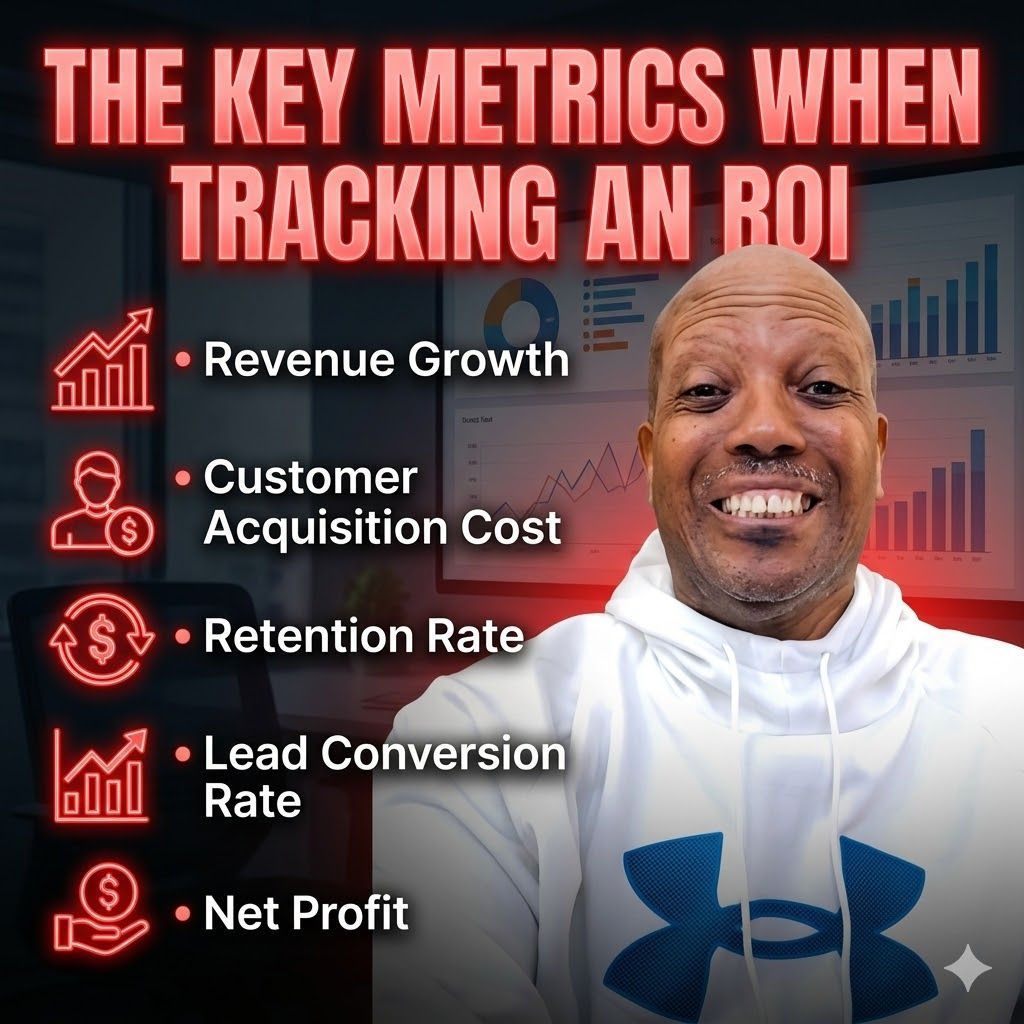
How To Track A ROI Model

Is Your Resume Getting Ignored, or Just Unresponsive? Most resumes read like a boring list of daily chores. Recruiters don’t want to know what you did—they want to know what you achieved. If you want to turn a passive skim into an immediate interview callback, you need to master the CART Formula. This high-conversion resume cheat sheet is designed to transform your professional history into a high-yield revenue and impact story. The CART Formula Broken Down The CART framework forces you to anchor your experience in psychology, behavioral proof, and measurable ROI. [ Challenge] + [Action] + [ Result ] + [Tie In] 1. Challenge (The Context) What it is: The friction point, inefficiency, or business obstacle you inherited. The Psychology: Humans are hardwired to pay attention to conflict before resolution. Setting the stage makes your eventual success look massive. 2. Action (The Strategy) What it is: The precise, high-leverage initiative you designed and executed to solve the problem. The Psychology: Move away from passive verbs. Use authoritative, ownership-driven language (e.g., Architected, Engineered, Optimized) to showcase your unique methodology. 3. Result (The Proof) What it is: The hard, quantifiable data that proves your action worked. The Psychology: Numbers offer cognitive reassurance. Whether it’s dollars saved, revenue generated, or efficiency percentages scaled, metrics eliminate doubt. 4. Tie-in (The Alignment) What it is: The explicit link connecting your past victory directly to the goals of the company you are targeting next. Psychology: This is the missing link in 99% of resumes. It bridges the gap between "Look what I did there" and "Here is exactly how I will replicate this success for your SAAS brand." Before & After: The CART Transformation Look at how a standard, flat bullet point transforms when put through the CART architecture a repeatable framework for scaling enterprise SAAS revenue (Tie-in). Before (The Chore List): > "Responsible for managing the client onboarding process and improving retention." After (The CART Formula): > "Inherited a chaotic onboarding system causing a 35% churn rate (Challenge); architected a psychology-driven UX workflow (Action) that secured a $29M capital raise and 40% retention spike in Q4 (Result), proving. Stop leaving your career growth to chance. Get the exact, plug-and-play template designed to make your resume structurally undeniable to recruiters and hiring algorithms alike. Testimonial # 1 I'm so glad I contacted Michael. I went from being unemployed for 3 months to having 5 interviews. I'm smiling all the way to the bank. Now my Annually salary is $ 179.00 T.H. Cleveland OH. Testimonial # 2 Michael has a deep understanding of brand psychology. He showed me the gaps in my approach. After my next steps I received a call from a major SaaS company. My salary has increased to $ 393,000. D.V. Miami FL. Testimonial # 3 Wow. In all my years of experience as a Cognitive Psychologist I never heard of such a mind blowing method. Michael's framework skyrocketed my appointments by 79%. He also told me the secrets of The Gatekeeper Method. Now I'm calling on two other colleagues to help me with my workload. Ready To Get Started? Simply Use The Consulting Form Reply [ Transform My Resume Now ]
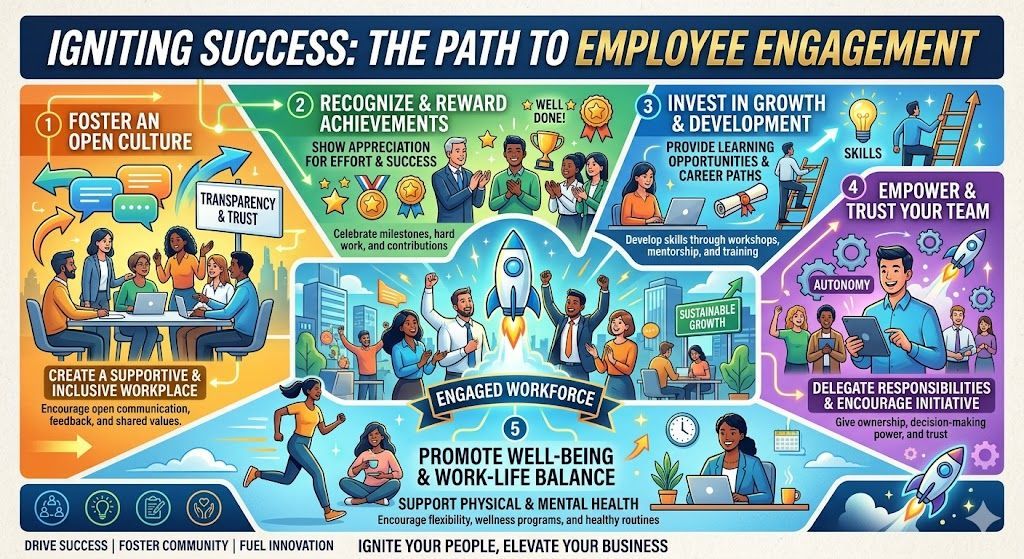
What Are The Best Employee Engagement Methods? That's the trillion dollar question. Did you know that between 2019 to 2024 (141.4 million people) walked off their jobs. The following Methods Listed below will help to prevent a repeat performance of the Great Walkout previously mentioned. 1. Radical Communication & Feedback Loops Trust cannot exist where communication is inconsistent or unidirectional. If employees feel left in the dark, they safely detach and just "go through the motions."(ContactMonkey) Implement Continuous, Two-Way Feedback: Ditch the heavy annual review as your primary tool. Transition to a continuous feedback model centered on structured, non-negotiable weekly or bi-weekly 1:1s.(Culture Amp) Close the Loop on Engagement Data: If you send out pulse surveys, you must share the aggregated results and the explicit action plan with the team. Collecting data and doing nothing with it actually lowers engagement faster than not asking at all. (Achievers) Context-Rich Leadership Updates: When changes happen, internal departments should focus heavily on the "why" behind decisions, helping teams connect their daily execution to larger organizational goals.(ContactMonkey) 2. Autonomy-Driven Growth Clarity People don't just want a job; they want to see a future. Disengagement often peaks when an employee feels stagnant or micromanaged. Map Personal Growth Plans (Not Just Job Paths): Work with employees to design custom internal mobility and upskilling pathways. Give them dedicated, protected hours each week to pursue learning—lack of time is the number one barrier to development.(Achievers) Optimize for Individual Strengths: Spend less time trying to fix minor weaknesses and more time positioning people where they naturally excel. Gallup’s data shows that employees who use their core strengths daily are significantly more engaged and less prone to burnout. The Successive Growth Framework: Shift the manager's role from a supervisor to a performance coach. Set clear, realistic, and measurable outcomes, then give the employee the creative freedom to figure out how to achieve them.(Achievers) 3. Real-Time, Specific Recognition Generic recognition feels hollow. To make appreciation a driver of success, it needs to be timely and tied to concrete actions.(Achievers) Decentralize Peer-to-Peer Recognition: Implement systems where team members can publicly call out wins across departments in real-time (whether via a dedicated Slack/Teams channel or a points-based recognition platform). (Culture Amp) Call Out the "Micro-Wins": Don't wait for a $2M deal to close to praise your team. Acknowledge the clean documentation, the swift resolution of a messy client issue, or a great save in a morning meeting.(Achievers) The Engagement Golden Rule: Employees thrive when they have absolute clarity on expectations, the exact tools to succeed, and a manager who treats them as a partner in growth—not a cog in a machine.

How Much Progress Have You Made In Solving This Major Problem '' Scaling Community- First Talent Recruitment? To: Chris Patrick HR Director of Carter Professional Care & Other Relevant HR Directors. Oklahoma City Oklahoma And Surrounding Areas From my experience as a Copywriting Solutions Architect & UX Growth Advisor, I’ve seen what happens when companies treat crucial talent acquisition like a simple checklist. The backbone of any rural health center is its people—both clinical and non-clinical. Yet, attracting high-quality physicians, Chief Nursing Officers (CNOs), and advanced practice providers to smaller, rural communities remains a constant, uphill hurdle. Let’s be honest: The old method of advertising these critical roles as just "jobs" is a tragedy waiting to happen. To save a community’s healthcare lifeline, you need a New Method—one rooted in high-impact, mission-driven storytelling that speaks directly to the purpose-driven professional. When you shift from job descriptions to personal missions, you don't just find people; you drastically optimize your entire talent acquisition pipeline: 1. Speed & Efficiency Metrics Accelerate your Time to Hire by cutting through the noise and capturing the right attention instantly. 2. Quality & Impact Metrics Elevate your Quality of Hire by attracting professionals who aren't just looking for a paycheck, but are looking to make an impact. 3. Financial & Sourcing Metrics Drastically lower your Cost per Hire by maximizing the organic reach and resonance of your sourcing channels. 4. Experience & Conversion Metrics Drive up your Offer Acceptance Rate by designing a candidate experience that feels less like an interview and more like an invitation to a legacy. The Bottom Line: While efficiency metrics like Time to Fill keep the doors open, balancing them with quality metrics like First-Year Attrition ensures you aren't just hiring quickly—you are hiring right. HR Directors: Your recruitment marketing needs to get stronger. The old playbook isn't cutting it anymore. I have the strategies ready to transform your outreach into high-performance revenue and retention systems. DM me directly or call 203-812-9082 (EST) to architect your new talent acquisition strategy.
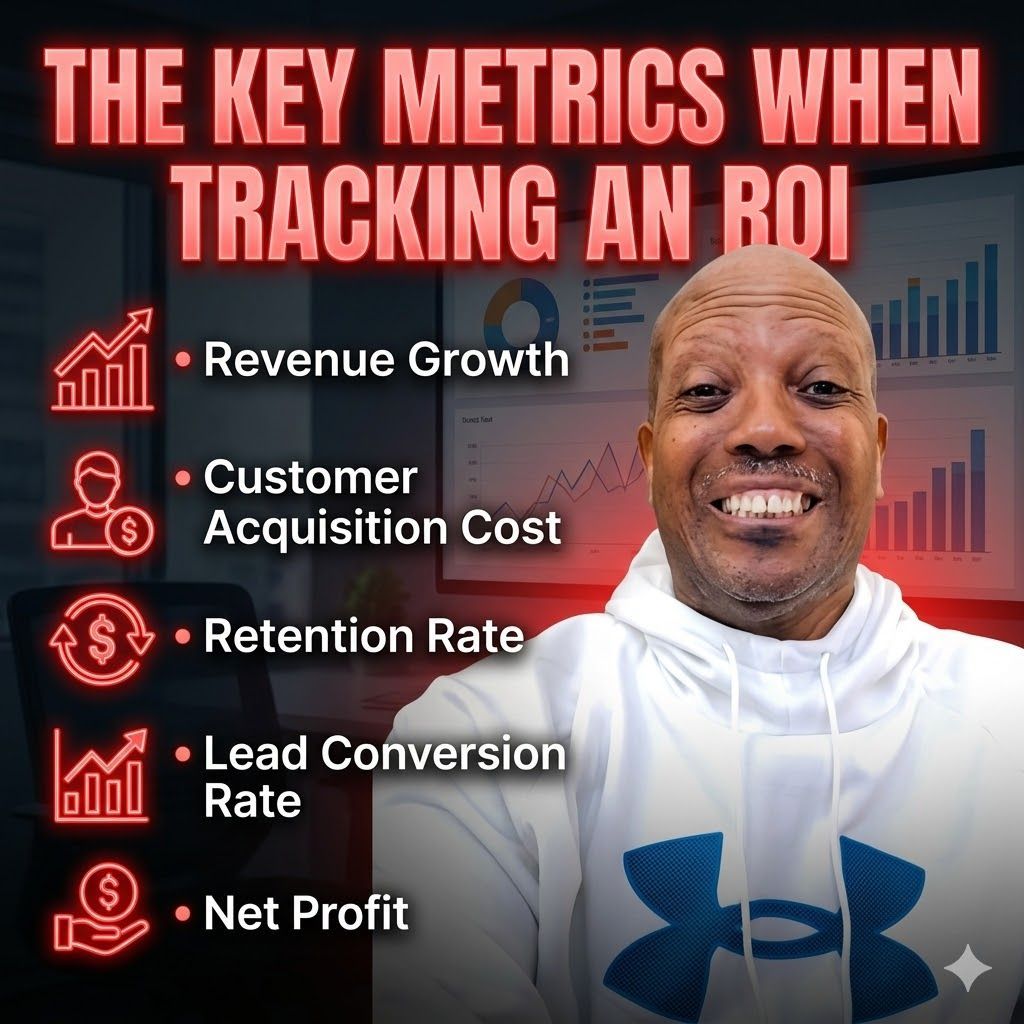
The Key Metrics Used When Tracking An ROI When tracking a Return on Investment (ROI) model , relying on a single final percentage rarely tells the whole story. To truly understand profitability, efficiency, and cash flow, you need to track a suite of metrics categorized by financial impact, efficiency, and time. Here are the key metrics used to build, track, and validate a robust ROI model: 1. Core Financial Metrics These metrics form the baseline of your model, focusing purely on the capital generated versus the capital spent. Net Profit (or Net Return): The total financial gain after subtracting all operating and capital expenses from total revenue. $$\text{Net Profit} = \text{Total Revenue} - \text{Total Costs}$$. Return on Investment (ROI): The standard efficiency metric expressed as a percentage. It shows how much profit is generated per dollar invested. $$\text{ROI} = \left( \frac{\text{Net Profit}}{\text{Cost of Investment}} \right) \times 100$$ Net Present Value (NPV): Used for longer-term investments to calculate the current value of a future stream of payments, adjusted for inflation and risk (the discount rate). A positive NPV means the investment is profitable over time. Internal Rate of Return (IRR): The annual rate of growth an investment is expected to generate. It is the discount rate that makes the NPV of all cash flows equal to zero, allowing you to compare different projects side-by-side. 2. Investment & Efficiency Metrics These metrics help you evaluate how lean your operations are and how effectively your capital is being deployed. Cost-Benefit Ratio (CBR): A ratio summarizing the overall relationship between the relative costs and benefits of a project. A CBR greater than 1.0 means the benefits outweigh the costs. Customer Acquisition Cost (CAC): Crucial for marketing and sales ROI models. It measures the total cost required to acquire a single new customer (marketing spend, sales salaries, overhead) divided by the number of customers acquired. Customer Lifetime Value (LTV) to CAC Ratio: Tracks the long-term value of the assets you acquire. A healthy ROI model typically targets an LTV:CAC ratio of 3:1 or higher, ensuring the revenue from a customer significantly outpaces the cost to get them. 3. Time-to-Value Metrics An investment that returns $10,000 in two months is vastly different from one that returns $10,000 in two years. Time-based metrics are vital for tracking liquidity and risk. Payback Period (Break-Even Point): The exact amount of time it takes for an investment to generate enough net cash flow to recover its initial startup cost. Time to Value (TTV): The period between the initial investment or launch and the moment the business starts realizing measurable financial benefits. 4. Advanced & Operational Adjustments To ensure your ROI model reflects reality rather than best-case scenarios, incorporate these operational metrics: Cost of Delay (CoD): A way of quantifying the financial impact of delaying a project or launch. It helps prioritize investments by calculating how much potential revenue is lost every week or month a project sits idle. Attribution Percentage: In complex environments (like multi-channel marketing or enterprise software rollouts), this tracks exactly what percentage of a revenue lift can be directly credited to the specific investment, preventing double-counting across different departments.
New Title

When you are raising funds—especially if you are targeting high-ticket investors, venture capital, or institutional private equity—there isn't a single magic formula that guarantees a check. Instead, the "best" formula depends entirely on what part of the deal you are trying to solve: how much to ask for , how to value your company , or how to prove the return to your investors. The strongest frameworks used by professional capital architects to structure a raise are broken down below. 1. The Capital Sizing Formula: "The 18-Month Runway" The biggest mistake founders make is picking a random, round number (like "We are raising $2M" ). Investors will immediately pull apart your budget to see if you actually know your numbers. The industry-standard formula for sizing a round is based on Net Burn Rate mapped against a specific growth milestone, typically built for an 18-month runway (plus a 3-to-6-month buffer). Target Raise Amount=(Monthly Revenue−Monthly Operating Expenses)×Runway Months How to pitch it: Don't just ask for the capital. Tie the formula directly to operational milestones. "We are raising $2.5M, which gives us 18 months of runway at a net burn of $120k/month. This capital specifically unlocks three key hires and scales our client acquisition to hit $5M in ARR, setting us up for a clean Series A." 2. The Dilution Formula (The 15-25% Rule) When raising early-stage equity capital, you aren't just selling a dream; you are selling a specific percentage of your company. Historically, standard venture rounds expect the founders to give up 15% to 25% of the company per round. To find your target valuation or your target raise based on acceptable dilution, use the basic equity equation: \text{Post-Money Valuation} = \frac{\text{Amount Raised}}{\text{Equity % Given Up} Pre-Money Valuation=Post-Money Valuation−Amount Raised Example: If you need $3M to execute your 18-month plan, and you are willing to dilute the company by 20%, your implied Post-Money Valuation is $15M (0.20$3M), meaning your Pre-Money Valuation is $12M . 3. The Investor's ROI Formula: Multiple on Invested Capital (MOIC) While you are focused on building the product or scaling operations, institutional investors operate on a specific formula to see if your deal fits their portfolio model. They track MOIC (Multiple on Invested Capital) and IRR (Internal Rate of Return). MOIC=Initial Capital InvestedTotal Value of Investment at Exit The Venture Capital Math: An early-stage VC generally looks for a 10x return potential on any individual investment because they know 70-80% of their portfolio companies will fail or just break even. If you are pitching a fund, your financial modeling needs to realistically show how their $1M investment turns into $10M at a projected liquidity event (exit or buyout) within 5 to 7 years. 4. The Growth Formula Investors Look For: The "Rule of 40" If you are raising for a recurring revenue platform or a SaaS business, investors will screen your efficiency using the Rule of 40 . This formula balances growth rate against profitability. Year-over-Year Growth Rate (%)+Profit Margin (%) ≥40% If you are growing at 60% YoY, you can afford to have a -20% net margin (burning cash to grow) because your total is 40%. If your growth slows to 20%, your profit margin needs to pull up to 20% to keep investors interested. 5. The Narrative Pitch Formula: Hook, Problem, Payoff Outside of pure math, you need a psychological formula for the pitch deck itself to drive urgency. High-ticket investors see hundreds of decks a week. The narrative formula that prevents them from scrolling past your deal is: [The Hook: Massive macro trend or terrifying market inefficiency] [The Friction: Why current solutions are losing money or failing] ↓ [The Delta: Our proprietary mechanism that captures this leak] ↓ [The Unit Economics: LTV:CAC and margin clarity proving it scales] ↓ [The Ask: Capital amount + specific milestone it unlocks]
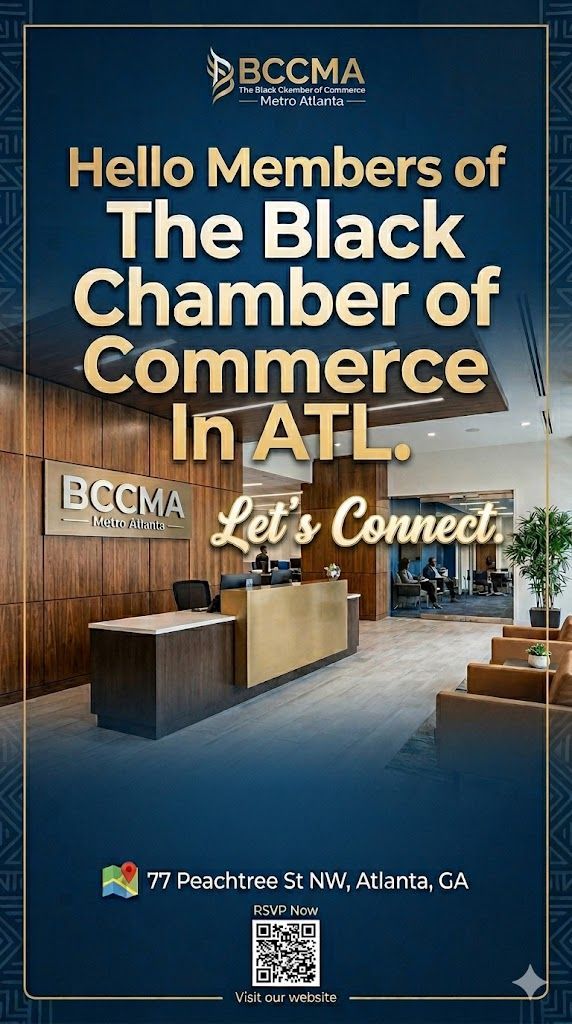
Hello The Black Chamber Of Commerce Members In ATL Let's Connect Hi Folks Even Though I'm Moving To Oklahoma City Oklahoma Soon. I'd Like To Connect With The Members Of The Black Chamber of Commerce In ATL (Atlanta) GA. Why? Because We Share The Same Mission. The Atlanta Black Chambers is a non-profit organization consisting of individuals engaging in Business, Community and Government activities. Our mission is to serve as an advocate for the creation and growth of competitive, profitable and sustainable Black owned entities. We are committed to providing quality education and training programs that emphasize economic development, ownership and wealth building practices. The absolute best formula for this is PAS-O (Problem, Agitation, Solution, Outcome) — specifically modified for architecture-level business scaling. Here is why it works and how to engineer it. The PAS-O Framework Breakdown Unlike standard copy formulas that just list features, PAS-O relies on restless agitation followed by a clear, high-value transition. Position your offer as the only logical bridge out of the chaos. Outcome Paint the future state of freedom and scale. Best Regards Mikey

Get Your LinkedIn Profile Development Cheat Sheet Now Is your LinkedIn profile working for you while you sleep, or is it costing you connections? Your profile shouldn’t just be a digital resume or a passive list of past duties. It needs to function like a high-converting landing page. When a decision-maker, investor, or potential partner lands on your page, you have exactly 3 seconds to answer three critical questions: 1️⃣ Who are you? (Clarity over cleverness) 2️⃣ What massive problem do you solve? (Your unique leverage) 3️⃣ What should they do next? (A clear call to action) If your headline is just your job title and your "About" section is a wall of text, you are leaving revenue and relationships on the table. To help you fix the leaks in your personal brand, I put together the Ultimate LinkedIn Profile Cheat Sheet . It breaks down the exact anatomy of a high-growth profile—from writing a compelling hook in your headline to structuring an "About" section that actually converts attention into conversations. No fluff. Just a repeatable framework to optimize your digital storefront today. 👇 Reply with "PROFILE" on the Consultant Form and Let’s talk. #PersonalBranding #LinkedInTips #GrowthStrategy #BusinessNetwork
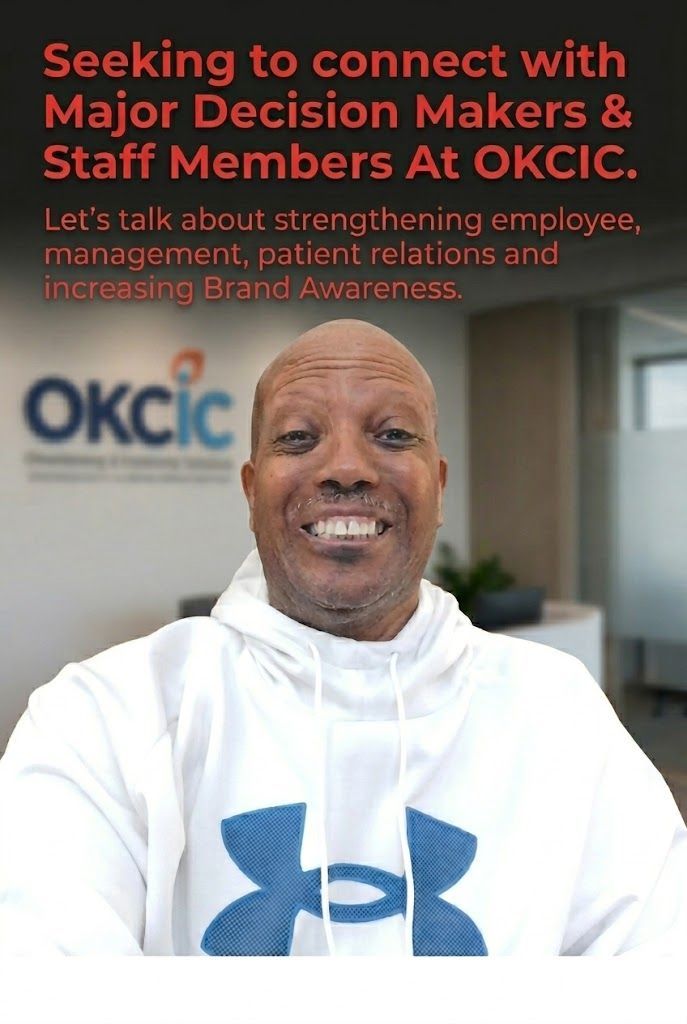
I'll Be Relocating To Oklahoma City Oklahoma Soon