
What Are The Best Employee Engagement Methods?
What Are The Best Employee Engagement Methods?
That's the trillion dollar question.
Did you know that between 2019 to 2024 (141.4 million people) walked off their jobs.
The following Methods Listed below will help to prevent a repeat performance of the Great Walkout previously mentioned.
1. Radical Communication & Feedback Loops
Trust cannot exist where communication is inconsistent or unidirectional.
If employees feel left in the dark, they safely detach and just "go through the motions."(ContactMonkey)
Implement Continuous, Two-Way Feedback: Ditch the heavy annual review as your primary tool.
Transition to a continuous feedback model centered on structured, non-negotiable weekly or bi-weekly 1:1s.(Culture Amp)
Close the Loop on Engagement Data: If you send out pulse surveys, you must share the aggregated results and the explicit action plan with the team.
Collecting data and doing nothing with it actually lowers engagement faster than not asking at all. (Achievers)
Context-Rich Leadership Updates: When changes happen, internal departments should focus heavily on the "why" behind decisions, helping teams connect their daily execution to larger organizational goals.(ContactMonkey)
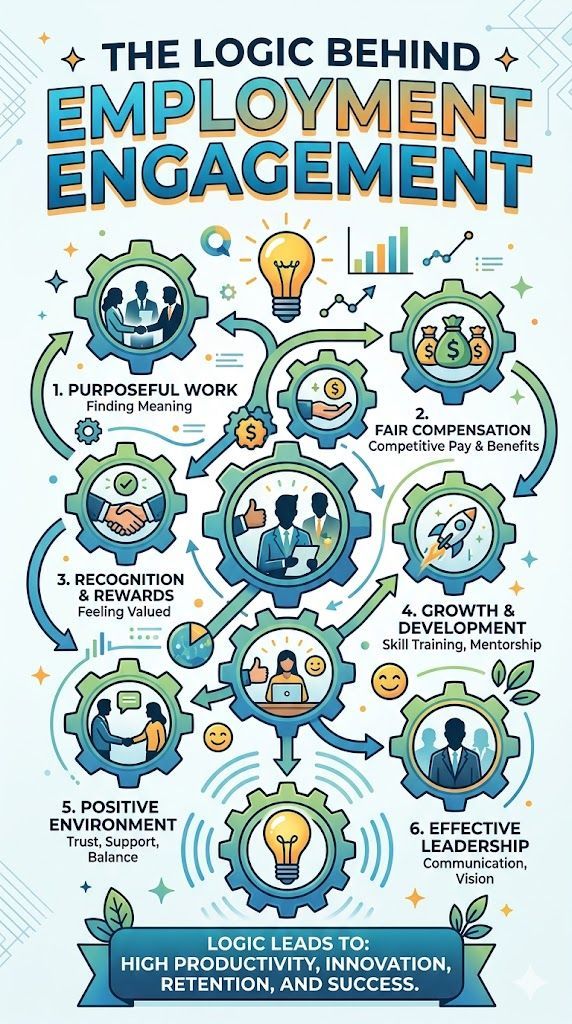
2. Autonomy-Driven Growth Clarity
People don't just want a job; they want to see a future.
Disengagement often peaks when an employee feels stagnant or micromanaged.
Map Personal Growth Plans (Not Just Job Paths): Work with employees to design custom internal mobility and upskilling pathways.
Give them dedicated, protected hours each week to pursue learning—lack of time is the number one barrier to development.(Achievers)
Optimize for Individual Strengths: Spend less time trying to fix minor weaknesses and more time positioning people where they naturally excel.
Gallup’s data shows that employees who use their core strengths daily are significantly more engaged and less prone to burnout.
The Successive Growth Framework: Shift the manager's role from a supervisor to a performance coach.
Set clear, realistic, and measurable outcomes, then give the employee the creative freedom to figure out how to achieve them.(Achievers)
3. Real-Time, Specific Recognition
Generic recognition feels hollow. To make appreciation a driver of success, it needs to be timely and tied to concrete actions.(Achievers)
Decentralize Peer-to-Peer Recognition: Implement systems where team members can publicly call out wins across departments in real-time (whether via a dedicated Slack/Teams channel or a points-based recognition platform).
(Culture Amp)
Call Out the "Micro-Wins": Don't wait for a $2M deal to close to praise your team. Acknowledge the clean documentation, the swift resolution of a messy client issue, or a great save in a morning meeting.(Achievers)
The Engagement Golden Rule:
Employees thrive when they have absolute clarity on expectations, the exact tools to succeed, and a manager who treats them as a partner in growth—not a cog in a machine.