
The Logic Behind Employment Engagement
New Title
The secret to high performance isn’t just great strategy—it’s genuine engagement. 🚀
When employees feel valued, heard, and empowered, "work" transforms from a daily checklist into a shared mission.
Employee engagement isn't a human resources initiative or a perk you offer once a quarter; it is the very foundation of innovation and retention.
At [Company Name], we believe that investing in our people means:
- Active Listening: Turning feedback into real, measurable action.
- Growth Pathways: Ensuring everyone has a clear trajectory for their career.
- Celebrating Wins: Recognizing both the massive milestones and the daily grinds.
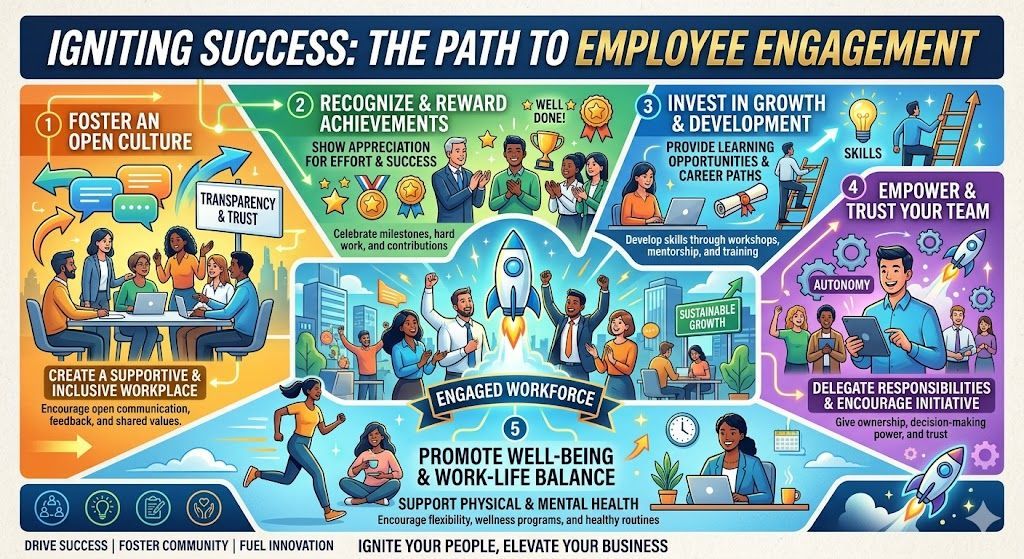
Below Are The Key Methods To Creating Effective Employee Engagement
1. Radical Communication & Feedback Loops
Trust cannot exist where communication is inconsistent or unidirectional. If employees feel left in the dark, they safely detach and just "go through the motions."(ContactMonkey)
- Implement Continuous, Two-Way Feedback: Ditch the heavy annual review as your primary tool. Transition to a continuous feedback model centered on structured, non-negotiable weekly or bi-weekly 1:1s.(Culture Amp)
- Close the Loop on Engagement Data: If you send out pulse surveys, you must share the aggregated results and the explicit action plan with the team.
- Collecting data and doing nothing with it actually lowers engagement faster than not asking at all.
Achievers
- Context-Rich Leadership Updates: When changes happen, internal comms should focus heavily on the "why" behind decisions, helping teams connect their daily execution to larger organizational goals.(ContactMonkey)
2. Autonomy-Driven Growth Clarity
People don't just want a job; they want to see a future. Disengagement often peaks when an employee feels stagnant or micromanaged.
- Map Personal Growth Plans (Not Just Job Paths): Work with employees to design custom internal mobility and upskilling pathways.
- Give them dedicated, protected hours each week to pursue learning—lack of time is the number one barrier to development.
Achievers
- Optimize for Individual Strengths: Spend less time trying to fix minor weaknesses and more time positioning people where they naturally excel.
- Gallup’s data shows that employees who use their core strengths daily are significantly more engaged and less prone to burnout.
- The Successive Growth Framework: Shift the manager's role from a supervisor to a performance coach. Set clear, realistic, and measurable outcomes, then give the employee the creative freedom to figure out
how to achieve them.
Achievers
3. Real-Time, Specific Recognition
Generic recognition feels hollow. To make appreciation a driver of success, it needs to be timely and tied to concrete actions.
Achievers
- Decentralize Peer-to-Peer Recognition: Implement systems where team members can publicly call out wins across departments in real-time (whether via a dedicated Slack/Teams channel or a points-based recognition platform).
(Culture Amp)
- Call Out the "Micro-Wins": Don't wait for a $2M deal to close to praise your team. Acknowledge the clean documentation, the swift resolution of a messy client issue, or a great save in a morning meeting.
Achievers
The Engagement Golden Rule: Employees stay engaged when they have absolute clarity on what is expected of them, the exact resources and tools required to do the job right, and a manager who treats them as a partner in growth rather than a cog in a process.
Strategic Metrics to Track
If you are implementing these strategies, don't just guess if they are working. Watch these four key performance indicators:
Strategy Pillar
Primary KPI
What It Tells You
Transparent Communication
eNPS (Employee Net Promoter Score)
Overall organizational health and trust.
Continuous Feedback
1:1 Completion Rate
Manager consistency and relationship health.
Career Clarity
Internal Mobility & Upskilling Rates
Whether people see a long-term future with you.
Culture & Well-being
Absenteeism & Burnout Survey Scores
Early warning signs of systemic disengagement.
How is your team fostering a culture of engagement this week?
I’d love to hear your favorite strategies just fill out the consulting form 👇