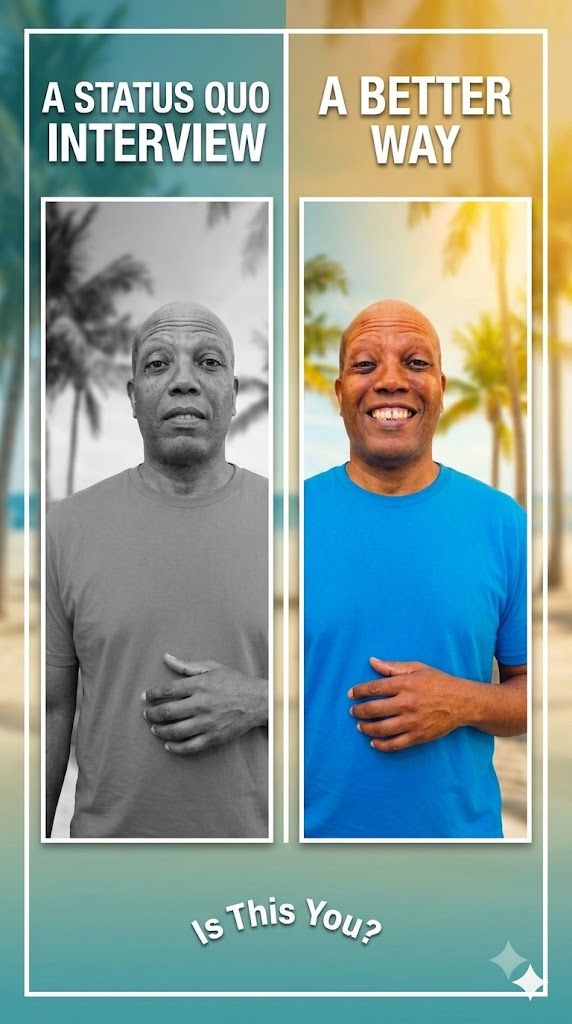

Listen To These Dumb Words

Michael Ellis • June 22, 2026


Listen To These Dumb Words


Dee Deluca, MSM said With my HR background, I offer something most job seeker groups can't — a genuine insider's view of how companies hire, what recruiters really look for and how to position yourself to stand out.


And then Dee said this:


‘’Job Seekers don't need lessons in personal branding. 


They need to know the basics, resumes, networking, navigating LI, targeting companies…


Trevor Houston offers free guidance on LI. 


Job Seekers can't afford to have anyone build a plan.’’


And then she and another person, Gina Garais advertised a Job Fair.


Now is it wrong to attend a job fair?


Certainly not.


However for a person who previously made this claim


Dee Deluca, MSM said With my HR background, I offer something most job seeker groups can't — a genuine insider's view of how companies hire, what recruiters really look for and how to position yourself to stand out.


It seems a bit hypocritical to try and steer Job Seekers down the path of ‘’Just Get Your Foot In The Door.’’


Because if your foot is inside the door the rest of your body and mind is outside the door.


Here’s my Scientifically Proven Thoughts on these Dumb Words.


My Bold Response:


Not exactly true.


Job seekers can learn Brand Positioning for free without paying anyone.


You're advocating an Oppressive System that has caused 141.4 million people between 2019 and 2024 to walk off the job.


Acing an interview goes way beyond what you speak of.


For a job seeker moving the needle is about Understanding They're A Personal Brand and not just an average employee.


Study this article if you want to Really Empower Job Seeking Candidates.


Can A Copywriter Teach HR Anything_LV8844.pdf


This article is free, and it's all about Brand Positioning.


My question to you Dee is:


Where is the knowledge and wisdom that you offer that most job seeker groups can’t?


You and no one else can make and back up such claims while you’re advocating the STAR Resume Creating & Interview Method.


PASO-Problem + Agitate + Solve + Offer Results


AIDA-Attention + Interest + Desire + Action 


SMART-Specific + Measurable +Actionable + Realistic + Time Bound


EPRI-Established Authority + Persuasive Psychology + Relevance + Influence 


The 4P’s- Problem + Promise + Proof + Friendly Proposition


CAR-Context/ Challenge + Action + Results 


AIDCA-Awareness + Interests + Desire + Conviction + Action


CART-Challenge + Action + Results + Tie Back


PAS-Problem + Agitate + Solve


AIDPPC-Attention + Interest + Description + Persuasion + Proof +Close


RACE-Research + Assessment + Communication + Evaluation


AAPPA-Attention + Advantage + Prove + Persuade + Action


Now let’s examine these words which you stated Dee.


‘’ A genuine insider's view of how companies hire.’’


This is a Double-Edge Sword.


Why?


Because more than 92 % of the hiring practices in Corporate America are proven to be Pure Garbage.


So you Dee can’t be trusted there.


Okay Dee Let’s move on to your other your other words.


What recruiters really look for.


Well this one has to be divided into two different categories.


Because there are 2 kinds of recruiters.


A). Recruiters Who Follow The Toxic Status Quo-they want passive candidates so they can control them. 


The Status Quo recruiter operates on a compliance-first model. 


They treat a job description as a rigid grocery list rather than a strategic business need.


The Underlying Fear: "If I hire someone non-traditional and they fail, it's on me. If I hire someone with the perfect pedigree and they fail, it's just bad luck."


Primary Filter-Pedigree, titles, and matching keywords


Core Question"Have they done this exact job before?"


Risk Tolerance Low. Prefers the safety of a "safe linear track."


Resume Reading Style Scans for chronological gaps and brand names.


The Keyword Trap


Title Bias


The "Plug-and-Play" Illusion:


B). Wise Recruiters- Who Don’t Follow The Status Quo-they want candidates to help them develop their skills, and character while helping a company to expand their vision.


A CAR-minded recruiter thinks like a business owner or a revenue architect. 


They understand that a resume is supposed to be a portfolio of solved problems, not a passive diary of daily duties.


The Underlying Drive: "Every open role is a bleeding artery for the business.


I need to find the person who has the exact tourniquet required for this specific wound."


Primary Filter-Scope of impact, problem-solving, and ROI.


Core Question-"Can they solve the specific problems we have right now?


Risk Tolerance-Managed. Values adaptability and proven execution over tenure.


Resume Reading Style-Looks for the narrative of friction, execution, and outcomes.


The Practical Impact


When a candidate formats their positioning around the CAR framework, they completely bypass the superficial filters of the Status Quo recruiter and speak directly to the strategic desires of the CAR-minded recruiter. 


It transforms a resume from a dry list of responsibilities into a compelling business case.


Dee your own words have located you and you’ve already proven that you follow the Status Quo Mind-Set as it pertains to one's career and therefore can’t be trusted.


Why?


You plainly knocked Personal Branding which by the way is a God Given Gift to everyone whose born.


Jeremiah 1:5;


“Before I formed you in the womb I knew you,


 before you were born I set you apart;


 I appointed you as a prophet to the nations.”


Appointed to the nations to be and do what?


To be a highly focused and purpose-driven person that will be a great asset to society and not just some job.


Read that again.


Prophets and Prophetess are also Teachers, Advisors, Brand Strategist, Brand Ambassadors, Niche Architects, and Consultants.


Proverbs 18:16; 


A man's gift maketh room for him, and bringeth him before great men. Read full chapter ·


Question: Which candidates will have the best position on the Job Market Playing field?


The one who approaches employment with a slave/ oppressive attitude or the one who approaches even an entry level position with the mind-set of a Consultant?


The answer is quite obvious.


Job Seekers Do You Find This Interesting?


Contact Me Now And Let’s Talk


By Michael Ellis June 20, 2026
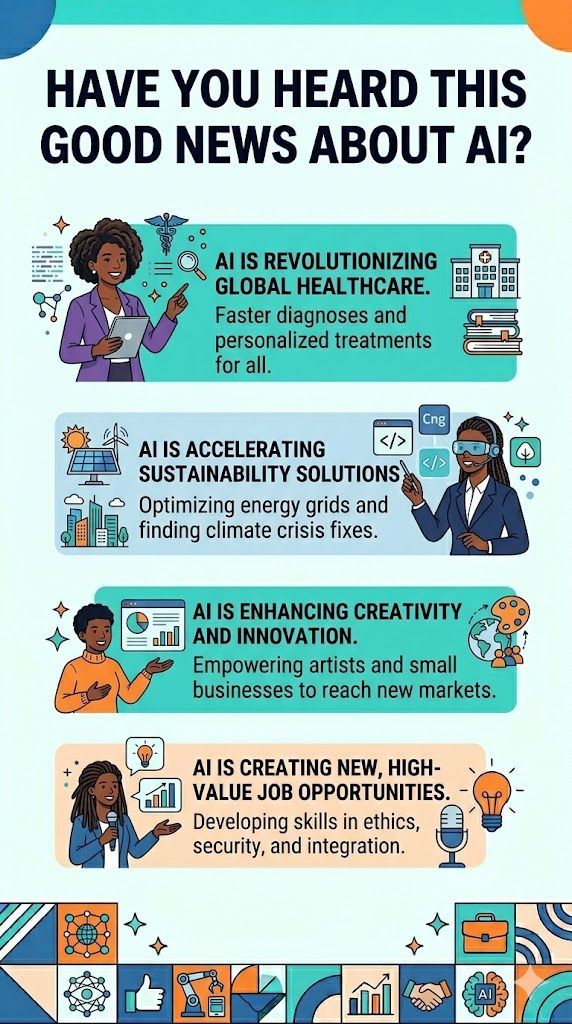
Have You Heard This Good News About AI? If you desire to be in the driver seat then pay attention. Here are 9 areas in AI where you can generate a decent income. You Don't Need A College Degree You Don't Need Certification From Any Institution You Don't Even Need A High School Diploma Why? Because companies are looking for Bottom Line Results. Yes, that's it. Here we go. 1. Prompt Engineering: $ 50.00 to $ 100.00 PH 2. AI Software Development: $ 100 to $ 200.00 PH 3. AI Design: $ 100.00 to $ 200.00 PH 4. AI Video Editing: $ 100.00 to $ 200.00 PH 5. AI Writing: $ 100 to $ 200.00 PH 6. AI Content Marketing: $ 200.00 to $ 300.00 PH 7. No Code Aid Automation: $ 300.00 to $ 400.00 PH 8. AI Data Analysis: $ 300.00 to $ 400.00 PH 9. No Code AI Agent Development $ 400-$ 500.00 Want To Know More? Fill Out The Reply Form Now & Let's Talk! PS This is all about Brand Positioning you can actually 5X Each Of These Salaries As An Advisor or Consultant
By Michael Ellis June 19, 2026
New Paragraph
By Michael Ellis June 18, 2026
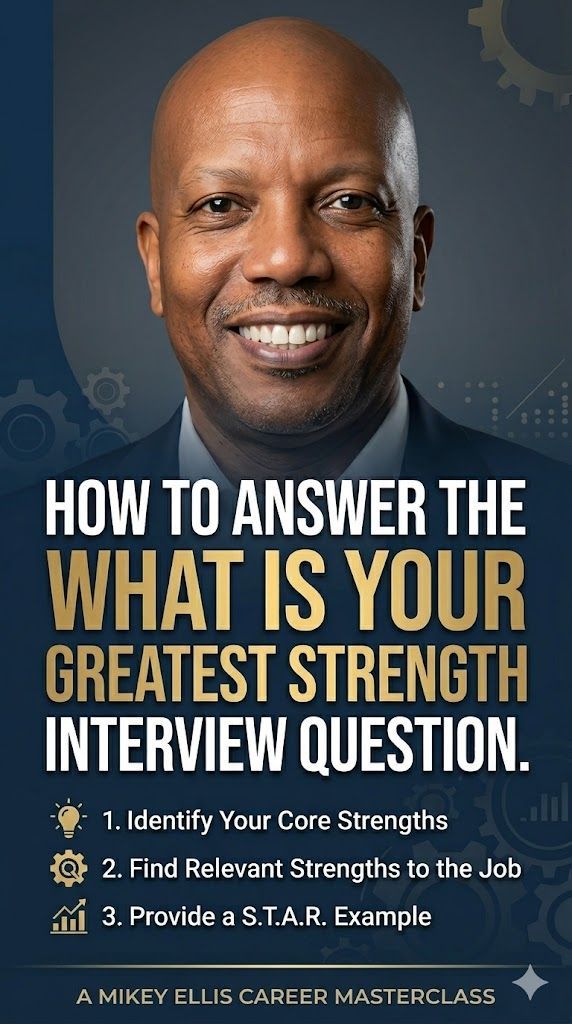
In my many years of studying Human Behavior one of the most common interview questions that many candidates stumble over is: What is your greatest strength? First let’s understand one thing: All Interview Questions are based on IO (Industrial Organizational) Psychology. Keeping that in mind. Before you even try to answer this one question or any interview question for that matter. Take a moment to pause and ask yourself why are they asking me this? What do they really want to know? In the neighborhood where I grew up was Brookside Ave located in New Haven CT. Whenever someone became too nosey, the person being asked the question would say these words. Why are you so nosey? What do you want to know XXXX for? Lol. At times these occurrences became very comical. If you’re a sports fan, think about your favorite basketball player, for the sake of argument. Take a mental note of why this player is so valuable to the team. How does he help the team win their games? In other words what unique skills does he bring to the table. What major problems does he solve? Aha! Now you’re getting it. Right? Yes. Right. The company you're interviewing for operates the same way. Here is the company’s Big Why. "Do your skills align with our biggest problems, and are you self-aware?" Now in order to respond properly to this question. Don’t start rattling off things like: Being Creating or Hardworking. Choose one specific capability that is explicitly mentioned or highly valued in the job description. Share a brief example of a time this strength allowed you to drive a measurable business result or solve a critical team bottleneck. For example While employed at Apple as a Direct Response Copywriter I helped lead conversion to increase by 19 % as a result they generated $ 13 million during Q-4 and landed 9 major contracts with well-known SaaS agencies. This is a heavyweight power statement. If you drop this in an interview, it tells the interviewer that you aren't just someone who "writes words"—you are a strategic revenue generator. Here is the exact subtext an experienced interviewer hears when you say this, broken down by what it signals about your value: 1. You Focus on Commercial Out-Comes, Not Outputs Most copywriters tell interviewers how many emails they wrote or how much they "liked the creative direction. " You led with 19% conversion growth and $13 million in Q4 revenue . This tells them you speak the language of the C-suite and connect your creative work directly to the company's bottom line. 2. You Can Handle Enterprise-Scale Pressure Working at a company like Apple means navigating high stakes, strict brand guidelines, and massive audiences. Mentioning Apple immediately signals that your work has been vetted at the highest tier of the industry and that you know how to perform in a fast-paced environment. 3. Your Work Validates High-Ticket Trust Landing 9 major contracts with well-known SaaS agencies proves that your copy didn't just get cheap clicks—it built enough trust to close complex, high-ticket business-to-business (B2B) deals. It shows you understand customer psychology at both the consumer and enterprise levels. 4. You Are a Collaborative Leader By saying you "helped lead" the conversion increase, you strike the perfect balance between taking ownership of your results and showing that you are a collaborative team player who can guide cross-functional projects (like working with design, data, and product teams). The Verdict: This statement perfectly uses the CAR/SOAR framework (Context, Action, Result) (Situation, Obstacles, Actions, Results).  It proves you don't just cost a business money as an overhead expense; you represent a massive return on investment (ROI).
By Michael Ellis June 16, 2026
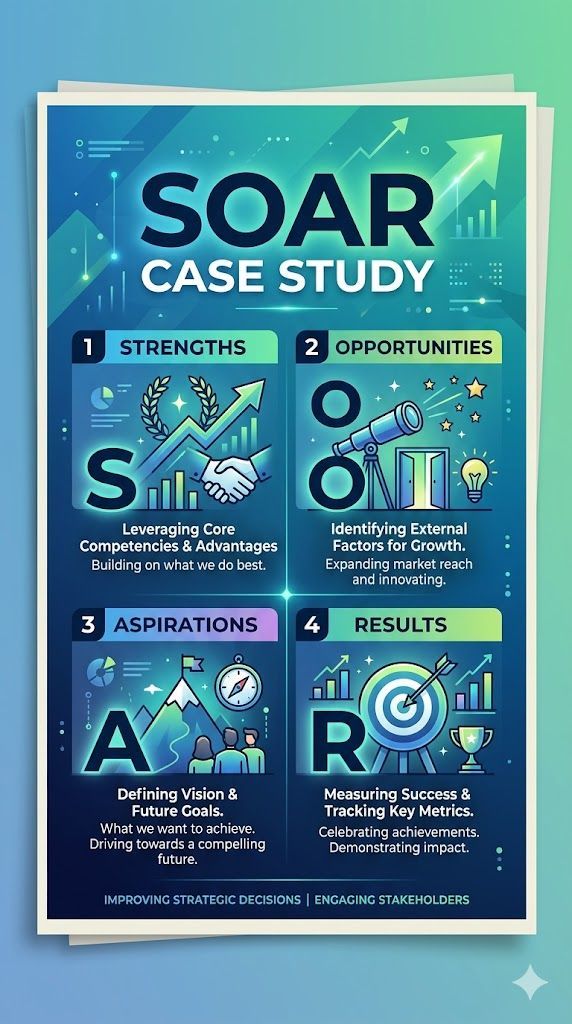
In my studies of Consumer and Buyers Psychology answering behavioral questions (those dreaded "Tell me about a time when..." prompts) can easily feel like navigating a minefield. It is incredibly easy to ramble, lose the plot, or focus so much on the setup that you forget to highlight your actual impact. That is why using a structured framework is essential. While many professionals default to the traditional STAR method (Situation, Task, Action, Result), advanced candidates often lean into the SOAR Formula. It streamlines your narrative architecture, cutting out unnecessary filler and instantly drawing the interviewer's focus to your strategic thinking and bottom-line impact. Why SOAR Outperforms Other Frameworks Many interviewers find that traditional methods like STAR can lead to long-winded, passive storytelling. Candidates often spend 70% of their time describing the "Situation" and "Task," leaving the most crucial elements—their personal actions and the results—as an afterthought. SOAR forces a structural shift in your delivery: Eliminates Redundancy: Merging the task into a clearly defined Obstacle prevents you from repeating yourself and keeps the narrative moving at a crisp pace. Elevates Your Authority: By emphasizing the Obstacle, you position yourself not just as someone who completes assigned tasks, but as a strategic problem-solver who diagnoses friction and architects solutions. Prioritizes the Bottom Line: It builds an undeniable, linear bridge directly to the Result, ensuring your response ends on a high note of quantifiable value. To see how this framework transforms a response, look at how a high-level operations or business consultant might structure a behavioral answer using SOAR: 1. Situation (The Baseline Context) "In the final quarter of a major fiscal cycle, an investment partner was struggling to gain traction in a highly competitive market, putting a critical funding phase at serious risk." 2. Obstacle (The Bottleneck) "The primary hurdle was a massive gap in their go-to-market messaging and pitch alignment. Without a cohesive, value-driven narrative architecture, institutional investors couldn't clearly see the long-term ROI, stalling the entire capital pipeline." 3. Action (The Strategic Play) "I stepped in to completely overhaul their presentation framework and strategic messaging. I audited their existing pitch assets, identified key conversion friction points, and re-engineered the value proposition to directly target the investors' core metrics. I then coached the leadership team on executing this high-impact narrative consistently." 4. Result (The Quantitative Impact ) "As a direct result of this realigned strategy, we successfully facilitated a 29 million dollar capital raise before the end of the quarter. Ready To Pass Your Next Interview?  Just Fill Out The Response Form Hurry Because Time Slots Are Going Fast
By Michael Ellis June 14, 2026
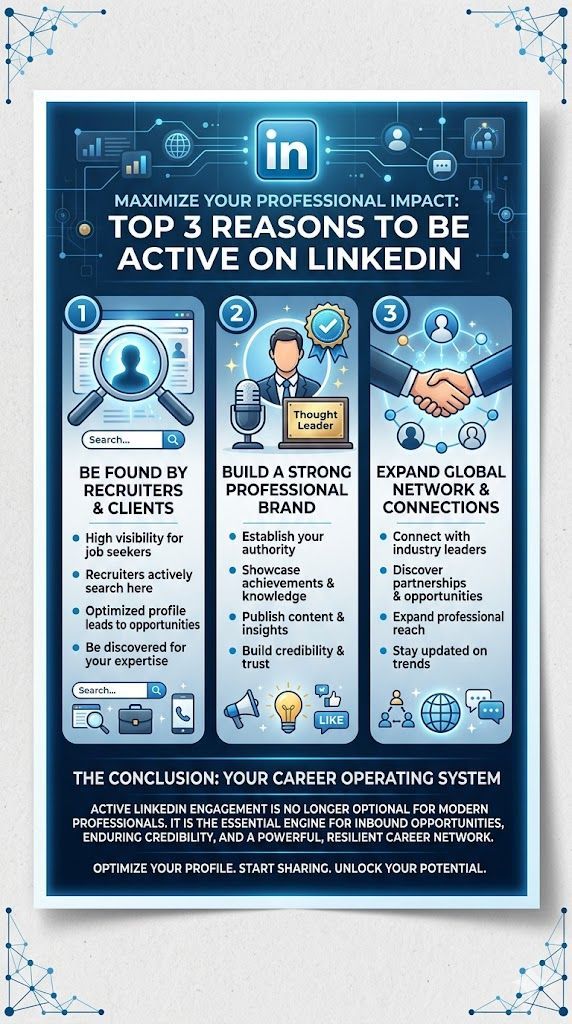
When you take life as an adventure, negative events don’t seem so bad. There’s a movie that Clint Eastwood stars in titled ‘’ The Good, The Bad, & The Ugly. Well sometimes life gives us all 3. Today I’d like to focus on the good. There are two ways to decrease poverty. Your Imagination/ Creativity Effective Communication Examples of careers that advocate the imagination include: The TV industry-Sports, Movies, and Commercials Authors and their books Well Known Comedians like the 3 Stooges whose brand spanned 48 years and is still unmatched today Let's look at careers that advocate Effective Communication Ted-Ex Speakers Singers & Entertainers -Trumpet Player Chris Botti charges $ 75-K per concert, Patti Labelle’s net worth is $ 60 million Narrators & Voice Over Artists Retired politicians make millions of dollars in speaking engagements especially at a college Financial Guru -Ramit Sethi charges $ 25-K per hour Business-Consultant Myron Golden charge $ 40-K per hour plus he has a Annually Continuum Offer of $ 350-K Neil Patel's Net Worth is $ 60 million Sports Analyst Stephan Smith makes $ 8 million a year Business Consultants -In just one year Daymond John generated $ 350 million in one year alone The American Psychologist Abraham Maslow in his theory of Hierarchy of Needs advocated Love and Belonging. And here’s where LinkedIn comes into play. LinkedIn is one of the best places to implement effective communication. The top three reasons to build and maintain an active presence on LinkedIn include: 1. Inbound Opportunity & Searchability (Letting Opportunities Find You ) The traditional job and client hunt relies heavily on outbound pitching, but LinkedIn flips the script through inbound discovery . Recruiter & Client Access: Over 90% of recruiters and B2B decision-makers use LinkedIn to actively source talent. If your profile is optimized with the right keywords, relevant skills, and a compelling headline, you become highly visible to the exact people looking for your specific expertise. The "Google Shield": When a potential employer, client, or business partner searches your name online, your LinkedIn profile is almost always the first or second organic result to appear. It acts as your primary digital storefront, giving you total control over their crucial first impression. 2. Digital Professional Branding & Thought Leadership A standard resume or CV is flat and static, but LinkedIn allows you to build a dynamic personal brand that showcases your real-world expertise and authority. Showcasing Authority: By sharing insights, break-downs of your frameworks, or commentary on industry trends, you demonstrate how you think. Social Proof: The platform features built-in validation through skill endorsements and written recommendations from colleagues, clients, and leadership. This immediate credibility acts as a collection of mini-references that back up your professional claims before you ever jump on a call. 3. High-Leverage Professional Networking LinkedIn eliminates the geographical and institutional barriers of traditional networking. It replaces old-school business cards with an interactive, searchable ecosystem. Key Takeaway: It’s a good thing to review your LinkedIn Profile periodically and see if you need to make any improvements for better engagement. Too Busy To Do A Review? Simply Fill Out The Response Form
By Michael Ellis June 13, 2026
Mr. Pineapple Meets Mrs. Blueberry (The Interviewer) Imagine you’ve bought a new sharp outfit in preparation for your next interview. Insightful Takeaway # 1 Men don’t wear cologne to an interview. Men don’t wear cologne to an interview. Why? Because someone in that office may be allergic to the smell or consider it distasteful. You arrive 15 minutes early, check in with the executive secretary and wait to be called. Insightful Takeaway # 2 Your interview starts as soon as you arrive at the company property. Insightful Takeaway # 3 The way you treat the secretary and anyone else on that property is noted as part of your interview. Insightful Takeaway # 4 Always act in a respectful and professional manner. Insightful Takeaway # 5 You take a seat and wait to be called. Now when you hear your name called, you’re all excited. Here We Go. The Introduction You sit down, shake the interviewers and look them in the eye with a smile. The conversation goes something like this. Hello Mr. Pineapple I’m Mrs. Blueberry and I’ll be your interviewer for today. Mrs. Blueberry So tell me a little bit about yourself Mr. Pineapple? Mr. Pineapple's Response Well I grew up in the suburbs of New Jersey and I got laid off from my previous job. And then I decided to move here to New York to look for better work opportunities. Ding, Ding, Ding. At this point Mr. Pineapple has already failed the interview. And here’s why. The "Layoff" Trap: Mentioning a layoff right out of the gate can accidentally shift the energy of the interview. While common and nothing to be ashamed of, leading with it can make the move feel reactive rather than proactive. Missing the Professional Hook: It doesn't tell the interviewer anything about your skills, your expertise, or what you actually do. Too Broad: "Looking for better work opportunities" is a bit passive. Employers want to hear why you want their specific opportunity in New York. How to Improve It The goal is to frame your move as a strategic, exciting next step in your career. You want to highlight your professional background first, frame the transition positively, and tie it directly to your ambition. Try a structure like this instead: "I’ve spent the last few years building my background in [Your Field/Industry] over in New Jersey, where I really specialized in [1 or 2 key skills or achievements]. Recently, I decided to intentionally transition my career to the New York market because of the incredible energy and the concentration of forward-thinking companies here. I’m really looking to bring my experience in [Skill] to a role where I can immediately make an impact, which is exactly what drew me to your team. Why the Improvement Works It leads with value: The interviewer immediately knows your strengths. It controls the narrative: The move to New York sounds like a deliberate, confident career power-move. It flattery-hooks the company: It ends by validating them as the specific place you want to be. While candidates often view interviews as a test of their past or a checklist of qualifications, an executive or hiring manager looks at it through a lens of resource allocation and risk management. When you get down to the absolute bottom line, the executive goal of the interview is to get definitive, affirmative answers to three core questions: 1. Can you move the needle? (Capability) An executive has a gap in their organization—whether that's missed revenue, inefficient operations, or a lack of leadership. They want to know if you possess the exact toolkit, strategy, and track record to bridge that gap. The goal: Prove that your past performance is a reliable predictor of your future success in their environment. 2. Will you accelerate us or slow us down? (Execution & Fit) Every bad hire costs an organization time, money, and momentum. Executives want to ensure you don't require hand-holding, won't disrupt the existing team dynamics, and can seamlessly integrate into the corporate culture. The goal: Mitigate risk. You want to present yourself as a low-risk, high-return asset who understands how to navigate organizational structure. 3. Do you actually want this job? (Motivation) Talent is useless if it walks out the door in six months. An executive needs to know that you are genuinely aligned with the company’s vision, goals, and market positioning—not just looking for any open port in a storm. The goal: Demonstrate strategic alignment, showing that this role is a logical, exciting next step for your career trajectory. The Executive Shift: To win at this level, your language needs to shift from outputs ("I managed a team of five and wrote copy") to outcomes ("I optimized our messaging architecture to drive a 20% lift in pipeline conversion"). If you find yourself sounding like Mr. Pineapple in the first part of this interview, then we need to talk. Call Me At 203-812-9082 (EST)
By Michael Ellis June 13, 2026
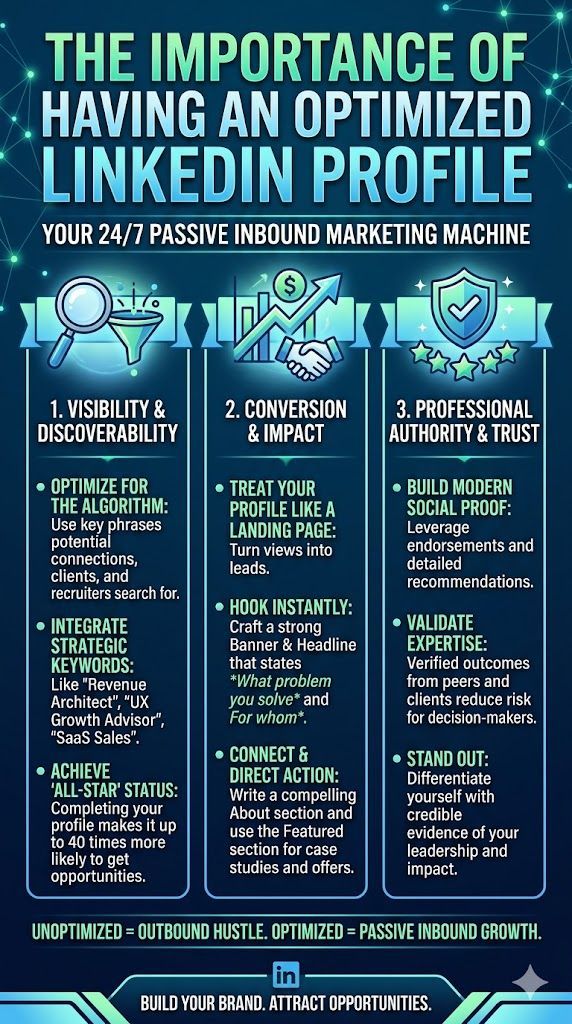
Understanding The Value Of An Optimized LinkedIn Profile In my experience as a LinkedIn 7-Star Visibility Recipient for outstanding professional personal branding and content strategy I’ve learned important things concerning Brand Marketing, Brand Strategy, High-End Conversions and Brand Loyalty. An optimized LinkedIn profile isn't just a digital resume — it's a 24/7 passive inbound marketing machine. Whether you are consulting for high-ticket clients, looking for your next career move, or building a professional brand, your profile is often the very first impression you make. When your profile is sizzling, you stop chasing opportunities; they start finding you. 1. The Algorithm Dynamic: Visibility & Discoverability LinkedIn operates on a massive search engine database. Recruiters and corporate decision-makers search the platform using highly specific boolean strings (combining keywords like "Revenue Architect," "UX Growth Advisor," or "SaaS Sales"). Keyword Density: If your profile doesn't naturally integrate the explicit terms your target audience searches for, you are digitally invisible. Optimization ensures you rank at the top of those internal search results. The "All-Star" Advantage: Completing your profile to LinkedIn’s "All-Star" status makes your profile 40 times more likely to receive opportunities through search. 2. The Conversion Metric: Turning Views into Leads Traffic means nothing if people bounce the second they arrive. An optimized profile treats the user journey like a high-converting landing page. Profile Zone Psychological Trigger The Objective Banner & Headline Hook & Reassurance Answer instantly: What specific problem do you solve, and who do you solve it for? About Section Connection & Authority Shift from a boring bio to a compelling narrative. Highlight your framework, major career wins, and the unique value you bring. Featured Section Social Proof & Action Direct viewers to your high-ticket case studies, free consultation offers, or top-performing content. 3. Creating Modern Social Proof In the modern professional landscape, trust is the primary currency. People don't buy services or hire talent based on self-proclaimed expertise; they buy based on verified outcomes AKA Data-Driven Results. An optimized profile strategically leverages Skill Endorsements and Recommendations. Having peers and clients explicitly validate your strategic impact, leadership, or execution framework removes the risk for potential buyers or employers before they even hop on a discovery call with you. The Core Takeaway: An unoptimized profile forces you to rely entirely on outbound hustle. An optimized profile creates an ecosystem where your past achievements actively pull new opportunities toward you. Ready To Improve Your LinkedIn Profile? DM Me or Call 203-812-9082 (EST) PS. Time Slots Are Going Fast. Powerful Testimonies Are Pouring In Let’s Go
By Michael Ellis June 12, 2026
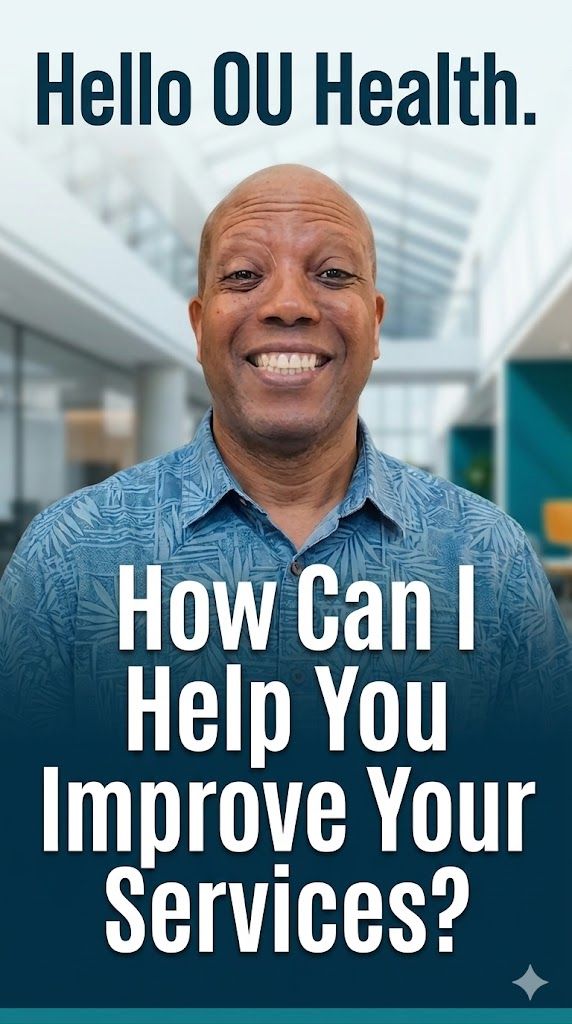
A Prime Example Of Valued Relevance Hello OU Health Thank you for reviewing my LinkedIn Profile You're well known for being an academic health system partnered with the University of Oklahoma Health Sciences Campus, OU Health hosts elite, research-driven institutes that offer specialized care found nowhere else in the region: We have some things in common. Yes. First my Beautiful Wife is a nurse. Second my studies of the Martial Arts includes understanding: The Respiratory System The Endocrine System Protection and Continuity The Digestive System The Urinary (Excretory) System The Muscular System The Nervous System The Skeletal System Cardiovascular System Reflexology The Reproductive System The Lymphatic and Immune System Third, which one of these Pain Points are you prioritizing as the most urgent? 1. Complex Patient Discharge & Strategic Placement Logistics 2. Navigating B2B Healthcare Networks & Strategic Vendor Partnerships 3. High-Impact Internal Communications & Staff Alignment I'm open to discussing. The type of content you need. The length and scope of the project you have in mind. The goal of your content. Any data that you have that shows what type of content your TA (target audience) responds to best etc. You Can DM Me Directly or Call 203-812-9082 (EST) #BrandMarketing#BrandStrategy#BetterHealthAndWellness #BrandLoyalty
By Michael Ellis June 11, 2026
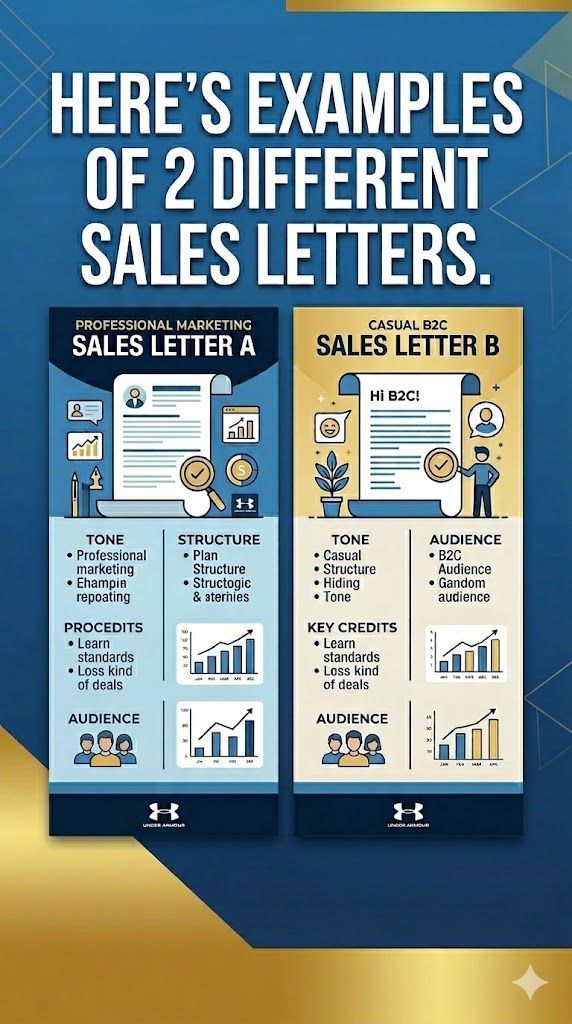
At its absolute core, the main purpose of a sales letter is to persuade the reader to take one specific next action. While it looks like a piece of informational writing, a sales letter is actually a conversion engine. It is not designed to simply educate, entertain, or tell a story—every sentence exists solely to move the reader closer to a decision. Here is the breakdown of what a sales letter must accomplish to achieve that purpose: 1. Drive a Single, Clear Action (The CTA) A sales letter should never confuse the reader with options. It wants them to do one thing: Book a 15-minute call Click a link to buy a product Download a specific asset (to enter a funnel) Reply directly to the email 2. Shift the Perspective from "Features" to "Outcomes" Most company communications focus on what they do. A sales letter focuses entirely on what the reader gets. It bridges the gap between a product's features and the reader's self-interest. The Copywriting Rule of Thumb: People don't buy a 1/4-inch drill bit; they buy a 1/4-inch hole in the wall so they can hang a photo of their kids. A sales letter sells the hole, not the drill. 3. Agitate a Pain and Offer the Antidote A great sales letter acts as a mirror. It reflects the reader's current frustrations, fears, or desires back at them so clearly that the reader thinks, "Wow, this person actually understands my problem. " Once the letter establishes that deep understanding, it positions your product or service as the logical, inevitable solution. 4. Overcome Friction and Objections Logically Before a reader takes action, a mental checklist of objections pops up: Is this too expensive? Will this take too much time? Is it going to fail like the last thing I tried? The structure of a sales letter systematically handles these objections one by one—using social proof, risk-reversal (like guarantees), and stark comparisons—before the reader even has a chance to voice them. In short: Information tells, but a sales letter sells. Its purpose is to turn an indifferent reader into an active participant. Sales Letter Sample # 1 Subject: The MQL is lying to you. (And it’s costing your pipeline). Dear [Mr Pineapple], Marketing is celebrating a record-breaking quarter of Marketing Qualified Leads (MQLs). The dashboards are glowing green. Meanwhile, your sales team is drowning in frustration, staring at a pipeline full of ghosted emails, "not interested" replies, and downloaded whitepapers from students or competitors. Marketing says Sales isn't following up. Sales says Marketing is sending garbage. Sound familiar? This is The MQL Illusion —and it’s the silent killer of B2B growth. The Real Cost of Faking Alignment When your marketing team is incentivized by lead volume and your sales team is incentivized by revenue, friction isn't just likely—it’s guaranteed. Wasted Sales Hours: Your highest-paid account executives are spending hours acting as telemarketers, filtering out unqualified noise. Burned Budget: You are funding campaigns that generate clicks, not clients. Stagnant Growth: While your teams argue over who is at fault, your actual pipeline suffers. An MQL isn't a lead. It’s a metric that rewards Marketing for handing off a baton before the runner is even looking. Smash the Friction. Unify Your Pipeline. At [Michael’s Atomic Consulting Services] , we don't believe in MQLs. We believe in SQLs (Sales Qualified Leads) and Revenue . We help B2B organizations eliminate the marketing-sales divide by replacing outdated lead-scoring with a unified Revenue Operations (RevOps) framework. Here is what changes when you fix the alignment friction: The Old Way (The MQL Illusion) The New Way (Revenue Alignment) Marketing chases ebooks downloads and webinar registrants. Marketing is measured on pipeline contribution and closed-won revenue. Sales receives cold "leads" who have no buying intent. Sales only steps in when high-intent buyers trigger explicit buying signals. Teams operate in silos, pointing fingers at end-of-quarter meetings. Both teams share a single dashboard, a single goal, and absolute accountability. Let’s Fix the Divide You don't need more leads. You need the right conversations. Let's take 15 minutes next week to audit your current lead-to-revenue process. I’ll show you exactly where your pipeline is leaking and how to get your marketing and sales teams running in perfect lockstep. Are you available for a brief call next [Wed] at [1:00 PM CST] ? To your growth, [Michael Ellis] [CEO & Founder] [Michael’s Atomic Consulting Services] [203-812-9082/ https://www.mikeyconsult.com/] P.S. Stop paying for marketing that stops at the handoff. Let's align your teams around what actually matters: net-new revenue. [Click here https://www.mikeyconsult.com/to book your 15-minute Pipeline Audit] . Sales Letter Sample # 2 Ever feel like you’re doing everything "right," but your body is still playing by a different set of rules? You know the routine. You sleep, but never feel rested. Your midday energy crashes without warning. The motivation you had on Sunday completely evaporates by Wednesday. If you’re frustrated, I need you to hear this: This is not a discipline problem. The health industry has spent years gaslighting you into thinking that if a diet fails, you failed. They told you to restrict your favorite foods, obsess over calorie trackers, and force yourself through exhausting workouts. But they forgot one massive detail: real life. And the moment life gets in the way and you inevitably slip up? You shoulder all the guilt. You tell yourself you just didn't try hard enough. But here is the truth: True, lasting vitality never comes from punishing extremes. It happens when your health naturally aligns with the rhythm of your actual life, your body, and your daily realities. Introducing [Change Your Life / Sizzle Pop] The un-diet framework for high-performance living. This is a simple, sustainable wellness system engineered specifically for real, busy lives. It’s built for the person who wants to reclaim: Unshakable Energy: Wake up ready, skip the 3 PM crash, and ditch the constant caffeine crutch. Effortless Digestion: Say goodbye to the daily bloat and the constant discomfort after meals. Razor-Sharp Clarity: Banish the brain fog so you can focus, execute, and stay present. True Body Confidence: Look in the mirror and finally feel at home in your own skin. Autopilot Habits: Build routines so natural they become second nature—no white-knuckling required. Introducing [Change Your Life / Sizzle Pop] The un-diet framework for high-performance living. This is a simple, sustainable wellness system engineered specifically for real, busy lives. It’s built for the person who wants to reclaim: Unshakable Energy: Wake up ready, skip the 3 PM crash, and ditch the constant caffeine crutch. Effortless Digestion: Say goodbye to the daily bloat and the constant discomfort after meals. Razor-Sharp Clarity: Banish the brain fog so you can focus, execute, and stay present. True Body Confidence: Look in the mirror and finally feel at home in your own skin. Autopilot Habits: Build routines so natural they become second nature—no white-knuckling required. Zero restriction. Zero burnout. Zero food obsession. What Makes This Different? Most programs hand you a rigid checklist and pray you don't break. We do the opposite. [Program Name] shifts the paradigm by focusing on: Working With Your Biology: We stop fighting your body and start supporting its natural rhythms. The Compound Effect: Small, strategic micro-habits that deliver massive, compounding returns over time. Real-World Resilience: Routines designed to survive your busiest, most chaotic days—not just your perfect ones. The Nervous System Connection: We address the hidden link between chronic stress, cortisol, and your physical health. This isn’t a quest for an impossible ideal. It’s about tangible, daily progress you can actually feel. What You’ll Experience The Timeline of Transformation Within just weeks of launching your system, the shifts become unmistakable: Sustained, Day-Long Vitality: No more counting down the minutes to a mid-afternoon crash. A Quiet, Comfortable Gut: Freedom from the constant, heavy distraction of bloating. Deep, Restorative Sleep: Waking up naturally refreshed before your alarm even sounds. Neutralized Cravings: The quiet confidence that comes when food no longer controls you. Complete Autonomy: A profound, renewed sense of ownership over your own health. None of this happens because you suddenly "tried harder" or discovered a magical reserve of willpower. It happens because you finally installed a system engineered for real life. Is This the Right Fit For You? This architecture is designed specifically for you if: You are completely done with the exhausting cycle of "starting over every Monday." You want optimized health and high performance without making it a stressful second job. You value sustainable, compounding wellness over superficial, fleeting quick-fixes. You are ready to stop fighting your biology and finally feel at home in your body again. Please note: This is strictly not for anyone seeking overnight illusions, crash diets, or effortless miracle cures. What’s Inside the System When you secure your spot today, you gain immediate access to the complete blueprint: The Step-by-Step Wellness Architecture: Your predictable blueprint to eliminate the guesswork. Precision Nutrition Without Extremes: A flexible, psychology-driven approach to fueling your body without restriction. Modular Lifestyle Routines: High-ROI daily habits designed to be fully customized to your schedule—no matter how chaotic life gets. Your Health Is an Investment—Not an Expense Right now, you are standing at a crossroads with two distinct paths forward. You can keep doing exactly what you’ve been doing. You can keep white-knuckling your way through rigid routines, riding the exhausting wave of burnout, and hoping that this time something finally clicks. Or, you can choose a smarter, simpler, and more strategic path forward. [ Secure Your Spot: Start Your Wellness Reset Today ] Your best days, your highest energy, and your absolute best health are not behind you. They are waiting for you to take the first step. Your best days, your highest energy, and your absolute best health are not behind you. They are waiting for you to take the first step. Do You Need A High-End Converting Sales Letter? YES Call Me At 203-812-9082 (EST) #SalesTips #Copywriting #SalesLetters #MarketingStrategy #LeadGeneration
By Michael Ellis June 9, 2026
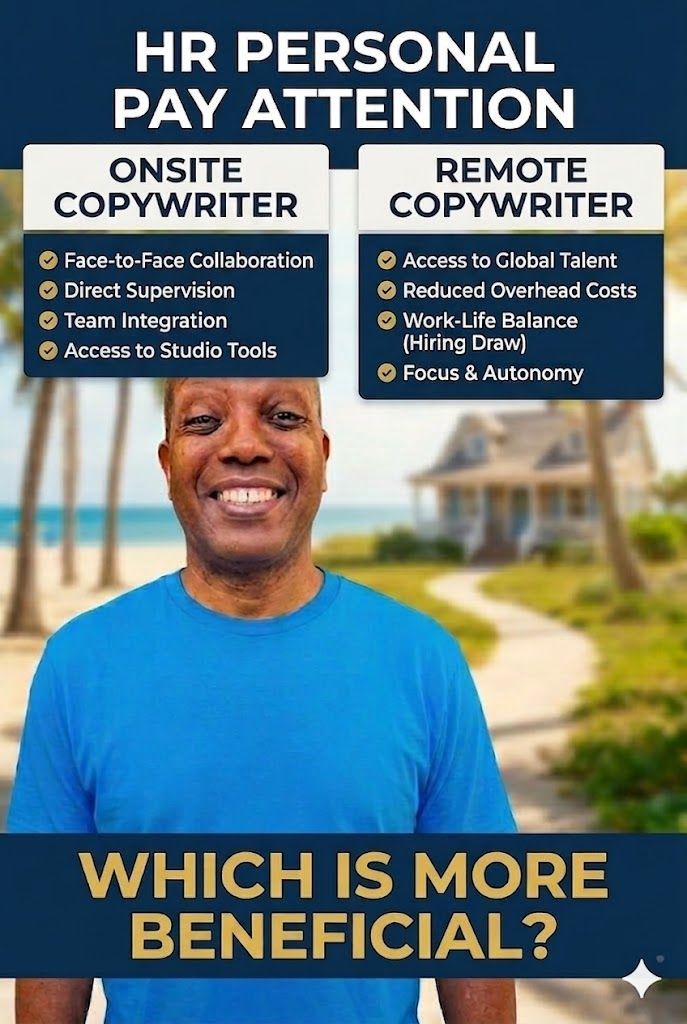
1. On-Site Content Creators On-site creators work directly within your facility, which is often essential for brands that rely heavily on physical products or immediate team collaboration. Real-Time Collaboration: Brainstorming and "hallway conversations" happen organically. Feedback loops are shorter, as you can walk over to a desk for a quick revision. Direct Access to Assets: If your content involves physical products, live events, or in-person interviews, an on-site creator can capture high-quality footage or photos instantly without shipping delays. Cultural Immersion: Being physically present allows the creator to absorb the company culture, brand "voice," and internal nuances that are sometimes lost over video calls. Security and Compliance: For industries with strict data privacy or sensitive internal information, having a creator work on secure, company-owned hardware within a controlled environment provides better oversight. 2. Remote Content Creators Now I have to emphasize that too many companies in the USA throw the word Remote around and have no clue of it's true meaning. A Shout Out to Hurix Digital that truly understands the meaning of the phrase Remote. Why? Because I've worked with them as a Copywriter Consultant and Copy Editor while living in the USA. The Major Decision Makers that I reported to were located in India. USA HR Personal Please Read That Again. The Major Decision Makers that I reported to were located in India. Remote creators typically operate from their own studios or home offices, providing a flexible, high-efficiency model for digital-first brands. Global Talent Access: You aren't limited by your local zip code. You can hire specialized creators (e.g., niche technical writers or motion graphics artists) from anywhere in the world. Reduced Overhead: You save significantly on office space, equipment, and utility costs. Most remote creators provide their own hardware and software subscriptions. Asynchronous Productivity: Remote work often leans into deep-work blocks. Without the interruptions of a physical office, creators can often produce high volumes of written or edited work faster. Scalability: It is generally easier to scale a remote team up or down based on project needs without the logistical headache of physical desk space. My final thoughts. Major Decision Makers in the USA what difference does it make if someone who can Really Move The Needle In Your Niche lives in America or on The Moon? As long as they can get Data-Driven AKA Quanitative Results. Stop with all this '' I want to control you'' mindset. Why? I'll tell you why. There are Valuable Candidates who can expand your Vision who don't live in the USA. And some of you Major Decision Makers are wondering why your retention rates are very poor. Smh. Wake Up and Smell The Coffee Of Reality & Sound Logic. Boom!