

The Dynamic Salary Of A UX Advisor
Michael Ellis • February 23, 2026
Knowing Your Worth As A UX Advisor Makes Positions You As A Thought Partner
#UXAdvisor
#UXStrategy
#DesignLeadership
#ProductStrategy
#UXConsultant
#ExecutiveInsights
#DesignGovernance
#BoardAdvisor
Drive business growth with expert UX Advisory services. Specializing in high-level design strategy, AI implementation, and ROI-driven user experiences to scale your product in 2026."
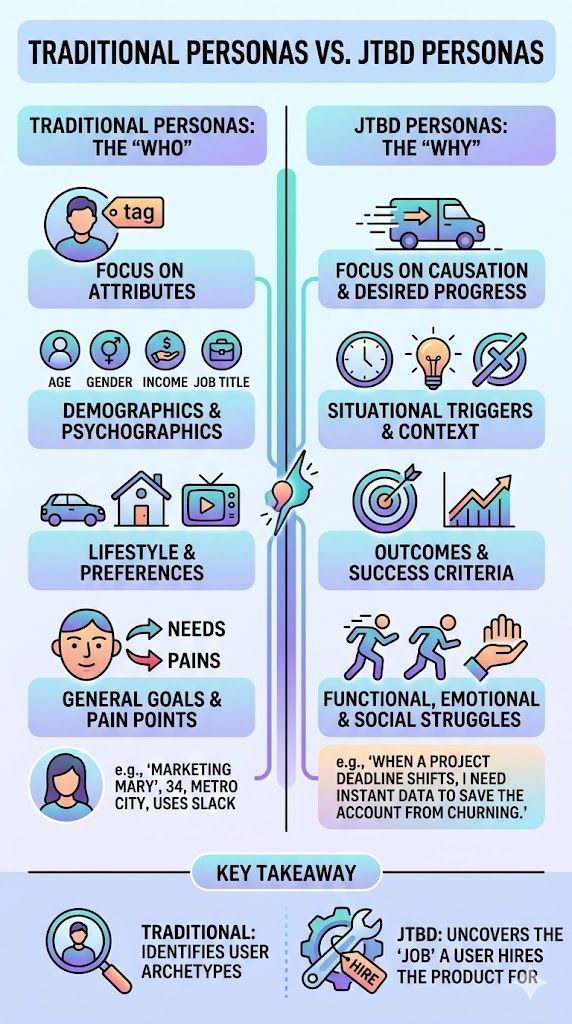
It’s Time To Compare Personas Traditional Personas vs JTBD The core difference comes down to who a person is versus what they are trying to achieve. Traditional personas focus on identity and attributes, while Jobs-to-be-Done (JTBD) personas focus on context, struggles, and desired outcomes. A Quick Snapshot 1. Traditional Personas: The "Who" These are fictional archetypes based on real data. They outline demographics, behaviors, goals, and pain points. Example: “Corporate Cathy, 34, lives in a metro area, makes $85k/year, uses Slack, and struggles with time management.” Best Used For: Tailoring brand voice, choosing media channels, and helping marketing/sales teams visualize a human being on the other end of the line. 2. JTBD Personas: The "Why" Based on Tony Ulwick and Clayton Christensen's frameworks, these ignore demographic traits to focus on the situational trigger and the progress the user wants to make. The premise is that people don't buy products; they "hire" them to solve a specific problem. Example: “When a sudden project timeline moves up by two weeks, I want to instantly pull accurate data reports without waiting on IT, so I can save the account from churning.” Best Used For: Product development, finding hidden competitors, feature prioritization, and building high-conversion, psychology-driven messaging that speaks directly to a user's struggle. The Takeaway: Traditional personas tell you who is sitting in the chair. JTBD tells you what happened to make them get out of their chair and look for a solution. Many high-growth teams actually overlay JTBD contexts onto traditional segments to get the best of both worlds. What To Discusss This Further? Just Fill Out The Response Form #BrandMarketing#BrandStrategy#BuyersPsycholgy#ConsumerPsychology#BrandLoyalty
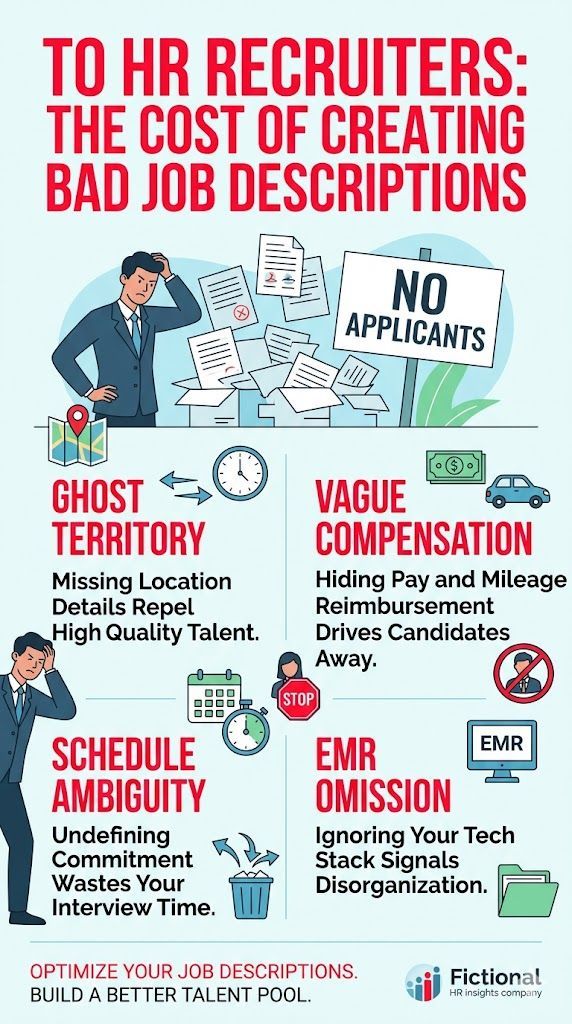
Hello HR Recruiters My behavioral studies reveal the following concerning poor job descriptions. When a job description is poorly written, it acts as a massive filter—but in the wrong direction. It repels high-performing, qualified candidates and attracts desperate, under-qualified applicants. When you include things like (The Ghost Territory), Vague or Hidden Compensation you’re shooting yourself in the foot. Why? I’ll tell you why. In 2026, transparency is mandatory for top talent. The Bottom Line: A bad job description creates a high-volume, low-quality hiring funnel. It forces your team to waste time interviewing people who are a poor fit, while the exact talent you want to hire scrolls right past you to a competitor who makes the expectations crystal clear. Ready To Improve Your Job Descriptions? Just Fill Out The Response Form Hurry Time Slots Are Going Fast #BrandMarketing#Brandstrategy#PersuasivePsychology#AtrractingTopTalent
When you are operating at a strategic level, collaborating with other major decision-makers isn't just a networking exercise—it’s a massive force multiplier for revenue, risk management, and speed to market. When high-level leaders align, they stop reacting to the market and start shaping it. Here are the top 5 reasons to actively collaborate with other major decision-makers: 1. Radical Risk Mitigation When you operate in a silo, your blind spots are your biggest financial and operational liabilities. Other decision-makers bring entirely different datasets, regulatory experiences, and historical lessons to the table. By collaborating, you can pressure-test strategies before capital allocation, stress-testing ideas against a wider array of market variables and avoiding costly, unforced errors. 2. Accelerated Speed to Market Bureaucracy and misaligned priorities are the ultimate killers of velocity. When top-tier leaders collaborate directly, you bypass the friction of mid-level translation layers. Decisions that typically take months of back-and-forth emails can be synthesized, greenlit, and initiated in a single, high-alignment session. 3. Asymmetric Resource Integration Every organization has structural limitations, whether in proprietary data, distribution networks, specialized talent, or technological infrastructure. Collaborating with peer decision-makers allows for the creative pooling of these assets. This integration yields capabilities that neither party could build independently without massive, inefficient capital expenditures. 4. Cross-Pollination of Innovation True innovation rarely happens in a vacuum; it occurs at the intersection of different disciplines. When leaders from different sectors or distinct functional areas overlap, they bring unique operational frameworks.A psychology-driven communication strategy paired with a high-scale tech infrastructure, for instance, transforms how a product catches fire in the market. 5. Geometric Market Authority When major decision-makers publicly align or co-develop initiatives, it sends a powerful signal to the industry. This joint authority acts as a trust accelerator. It commands immediate market attention, deepens client retention, and creates a defensive moat that makes it incredibly difficult for fragmented, lower-tier competitors to disrupt your positioning. The Bottom Line: Siloed leadership scales linearly. Collaborative leadership among major decision-makers scales geometrically.
This is a subtitle for your new post
Hello: Hiring Managers & Personal Whatever you're doing please stop. Pay Attention Pay Attention Pay Attention Have you ever searched for a product on the internet and read something like this: Meet the new [Phone Name]. Experience next-gen Agentic AI, a revolutionary pro-grade camera system, and all-day battery life. Buy yours today with free shipping! Get the new [Phone Name] at [Company Name]. Learn about specs, colors, and pricing. Plus, save up to $1,100 with an eligible trade-in for a limited time! Is the new [Phone Name] worth the upgrade? Read our in-depth review covering the upgraded AI features, real-world camera tests, and hidden pros and cons. These are called Meta-Descriptions. And Copywriters, and Brand Architects ( Strategist Create These). Do you see how detailed these meta-descriptions are? Now let's compare these samples to a flimsy job description. MET Fire Protection Discipline Manager (PE Reguired). Here's another bad example: Senior Mechanical Design Engineer-HVAC Listen people Top Talent Candidates are going to pass this Job offer by. Why? Because it lacks vital details. Want To Know How To Improve Your Job Descriptions? Reply IMPROVE & Fill Out The Consulting Form.

This is a subtitle for your new post
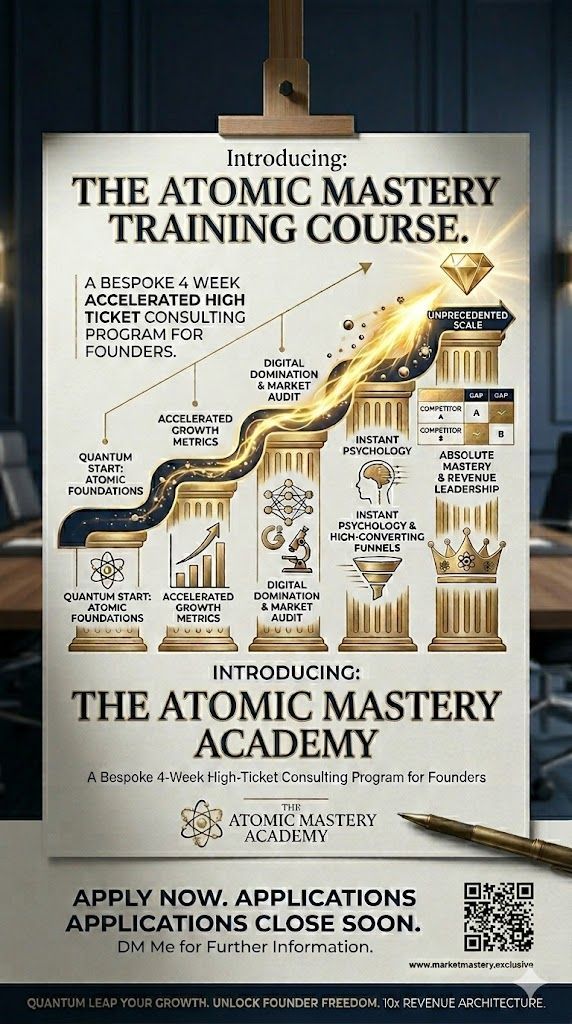
Stop guessing where your competitors are leaving millions on the table. 🛑 Most founders look at their rivals and copy their features, their pricing, or their design. That’s a fast track to becoming a second-rate commodity. If you want to unlock elite pricing and scale past your current revenue ceilings, you don’t copy them. You find the gaps in their architecture and exploit them. Introducing The Atomic Mastery Training Course. 🛡️ This is a bespoke, 4-week accelerated high-ticket consulting program designed exclusively for founders who are ready to stop guessing and start winning. You won't be handed a generic spreadsheet. You'll be taken through a rigorous, high-impact revenue audit to map out exactly where your market rivals are failing their customers—and how you can sweep in to claim that market share. You Can Gain The Edge Over Your Competitors The Available Training Courses Competitive Analysis SWOT Gap Analysis ROI Analysis P&L Analysis SWOT Analysis Impact Analysis Risk Analysis Cost-Benefit Analysis By the end of these 4 weeks, you will possess a tailored market blueprint to completely optimize your Unique Value Proposition (UVP), eliminate friction in your pipeline, and engineer a scroll-stopping messaging ecosystem that commands premium fees. No more copying the market. It’s time to lead it. Hurry! 🚨 APPLICATIONS CLOSE SOON. 🚨 We keep cohorts strictly capped to maintain high-touch, bespoke strategic consulting for every single founder inside. 👉 DM me the word "ATOMIC" for further information and let's see if your revenue system is ready for the leap.
Take A Look At This Interesting Conversation The Data Scraper Said: Sure, I completely understand your question about a legal contract. At the moment, we do not have a separate legal contract for the referral/partnership model. Our cooperation is based mainly on trust, transparency, and long-term business interest. For me, the main goal is not to save money on commissions. My goal is to grow the business and build long-term, mutually beneficial relationships with people who can bring good clients. For example, if a referral brings a client who pays $2,000, I am more than happy to pay the agreed commission. It would make no sense for me not to pay it, because by paying the commission I keep a good partner motivated, and that partner may bring more clients in the future. Not paying the commission would be a very short-sighted decision, because I would lose a valuable long-term partner. Also, if you reviewed how we usually work with clients, you probably saw that we do not ask for upfront payments in most cases. We usually build a demo first, show it to the client, and only after the client confirms that everything looks good, they pay. So we also take risks on our side. In general, my work is built on trust. When a new client comes to us and I spend time building a scraper, automation demo, or technical proof of concept without prepayment, I am already taking responsibility and trusting that the client will act fairly if the result is good. The same principle applies to partnerships. If you bring real clients and the project is successfully paid, I want you to earn your commission and continue working with us. My interest is to create a reliable referral relationship where everyone benefits: the client gets the solution, we get the project, and you get paid for bringing the opportunity. MY RESPONSE You can actually create one from the template I sent you. Why? Because in my experience in dealing with Confidential Angel Investors it's a basic requirement. You have to remember who you're dealing with here. These CEO's etc. are not going to take an offer without some form of legal contract. You can formulate one from the one I sent you. Or even Google it and use a Legal Contract Templa I mean do you think when one or more of these High-End Paying Clients buys a Rolls Royce, Bugatti, or a Billion Dollar Home or Commercial Property they don't sign a contract? Contracts Build Trust. Contracts Build Trust. Contracts Build Trust. All throughout history some form of a Contract Agreement was always involved in business. I will not present any kind of offer to my precious network without proper legal documentation. Win Win Situations Are Sealed Via Contracts, AKA Proper Party Signitures. And that's final. h ttps://lnkd.in/ezDiJWSb Free Referral Agreement with Downloadable Templatesignaturely.com
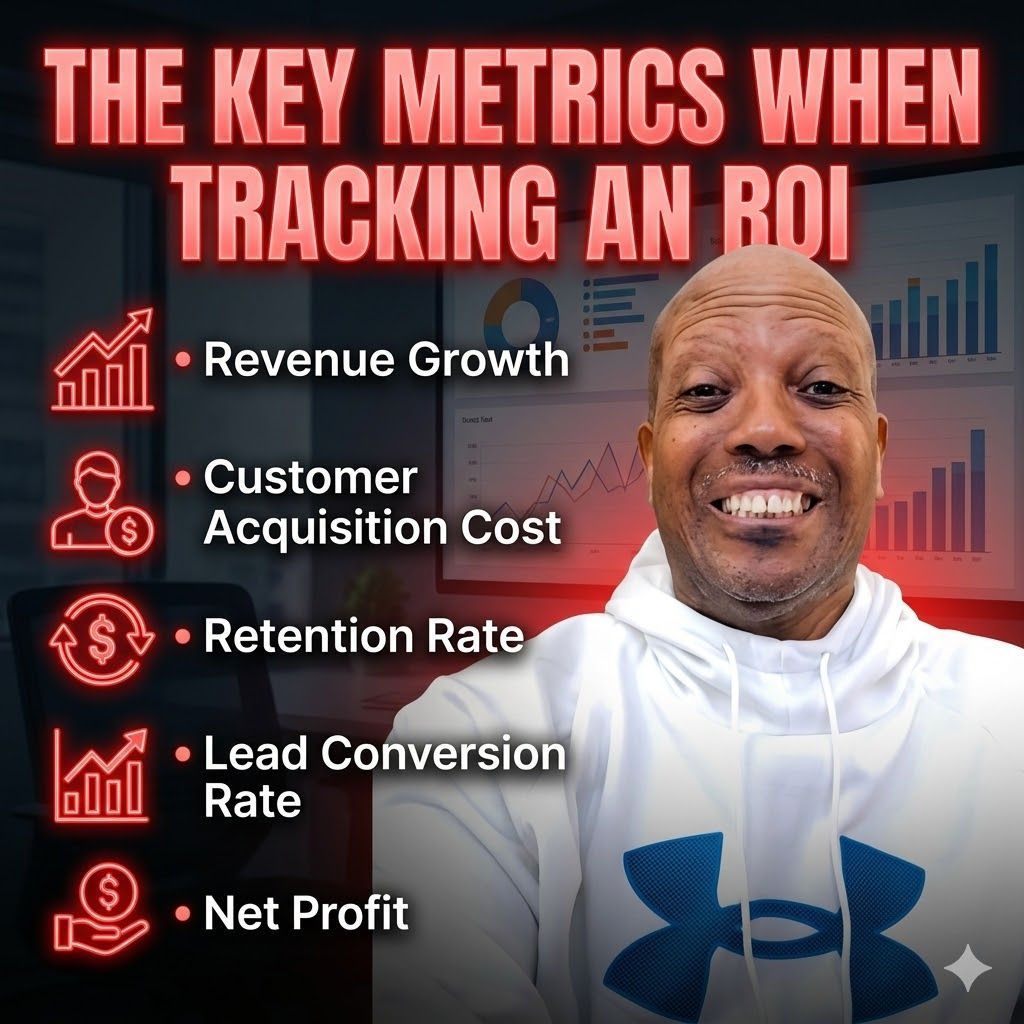
How To Track A ROI Model
Is Your Resume Getting Ignored, or Just Unresponsive? Most resumes read like a boring list of daily chores. Recruiters don’t want to know what you did—they want to know what you achieved. If you want to turn a passive skim into an immediate interview callback, you need to master the CART Formula. This high-conversion resume cheat sheet is designed to transform your professional history into a high-yield revenue and impact story. The CART Formula Broken Down The CART framework forces you to anchor your experience in psychology, behavioral proof, and measurable ROI. [ Challenge] + [Action] + [ Result ] + [Tie In] 1. Challenge (The Context) What it is: The friction point, inefficiency, or business obstacle you inherited. The Psychology: Humans are hardwired to pay attention to conflict before resolution. Setting the stage makes your eventual success look massive. 2. Action (The Strategy) What it is: The precise, high-leverage initiative you designed and executed to solve the problem. The Psychology: Move away from passive verbs. Use authoritative, ownership-driven language (e.g., Architected, Engineered, Optimized) to showcase your unique methodology. 3. Result (The Proof) What it is: The hard, quantifiable data that proves your action worked. The Psychology: Numbers offer cognitive reassurance. Whether it’s dollars saved, revenue generated, or efficiency percentages scaled, metrics eliminate doubt. 4. Tie-in (The Alignment) What it is: The explicit link connecting your past victory directly to the goals of the company you are targeting next. Psychology: This is the missing link in 99% of resumes. It bridges the gap between "Look what I did there" and "Here is exactly how I will replicate this success for your SAAS brand." Before & After: The CART Transformation Look at how a standard, flat bullet point transforms when put through the CART architecture a repeatable framework for scaling enterprise SAAS revenue (Tie-in). Before (The Chore List): > "Responsible for managing the client onboarding process and improving retention." After (The CART Formula): > "Inherited a chaotic onboarding system causing a 35% churn rate (Challenge); architected a psychology-driven UX workflow (Action) that secured a $29M capital raise and 40% retention spike in Q4 (Result), proving. Stop leaving your career growth to chance. Get the exact, plug-and-play template designed to make your resume structurally undeniable to recruiters and hiring algorithms alike. Testimonial # 1 I'm so glad I contacted Michael. I went from being unemployed for 3 months to having 5 interviews. I'm smiling all the way to the bank. Now my Annually salary is $ 179.00 T.H. Cleveland OH. Testimonial # 2 Michael has a deep understanding of brand psychology. He showed me the gaps in my approach. After my next steps I received a call from a major SaaS company. My salary has increased to $ 393,000. D.V. Miami FL. Testimonial # 3 Wow. In all my years of experience as a Cognitive Psychologist I never heard of such a mind blowing method. Michael's framework skyrocketed my appointments by 79%. He also told me the secrets of The Gatekeeper Method. Now I'm calling on two other colleagues to help me with my workload. Ready To Get Started? Simply Use The Consulting Form Reply [ Transform My Resume Now ]